RS 100: World Religions — Eastern Traditions
Doris Jakobsh
Estimated study time: 1 hr 12 min
Table of contents
Module 1: The Study of Religion — Week 1
Why Study Religion?
The term “religion” itself means different things to different people, yet there are many billions of individuals for whom religion plays a central and defining role in everyday life. To understand humanity, the human condition, and the choices people make, it is important to grasp some of the fundamental aspects of religion. Religion, perhaps even more than trade on a global scale, has shaped the world as we know it — it is, more than any single movement, an important transnational force. Religion has inspired individuals and communities to acts of extraordinary excellence and kindness, but it has also contributed to misunderstandings, violence, and intolerance. Coming to a better understanding of religion enables one to start asking important questions about the divergence in how and why religion influences people.
Religion courses are also excellent ways to prepare for everyday life in a multicultural, multi-religious country like Canada. Coming to a deeper understanding of one’s peers’ or friends’ religious perspectives is an important pathway to peaceful and compassionate co-existence.
You do not need to be religious to study religion. The goal of this course is religious literacy — the ability to understand religious systems and their cultural significance — not religious conversion. The American Academy of Religion (AAR), the world’s largest association of scholars who research or teach religion, emphasizes this distinction consistently.
What is Religion?
Your textbook speaks of a “long, multi-layered, and obscure history” of religion. What we understand as “religion” today is not what the term meant throughout the history of human beings. Historically and etymologically, terms associated with religion included notions of “to tie,” “awe,” “to be careful,” and “to repeat or reread.” This evolution of meaning is itself a reason why studying religion is so fascinating — words, and the concepts they carry, do not hold the same meaning throughout history.
Inventing Religion
Many scholars of religion describe the development of the concept of “religion” as something that was, in important ways, invented. The expansion of colonial powers — largely through explorers and missionaries — played a significant role in this development. When encountering “other” cultures, missionaries and explorers felt they needed to distinguish between their own beliefs, rituals, and structures (which they called “religion”) and the ceremonies and beliefs of those they encountered (which they dismissed as “customs” or “superstitions”). These notions of superiority are closely tied to judgement, ignorance, and racism.
As your textbook notes, much of how religion has been understood historically has to do with valuing one’s own beliefs as superior and those of “the other” as having lower meaning and value. Dr. Kline notes that dividing the world into “eastern” and “western” religions essentially boils down to politics: “traditionally Europe, the continent that both dominated geopolitics throughout the nineteenth century and the early part of the twentieth century and invented the study of religion.” What is often left out of this paradigm are other belief systems often denoted as “spirituality” or “tribal customs.”
*Animated map showing how religion spread around the world (Business Insider, 2015)*Defining Religion
Substantive Definitions
Substantive definitions provide definitive answers to the question “What is religion?” Three major figures in this tradition are:
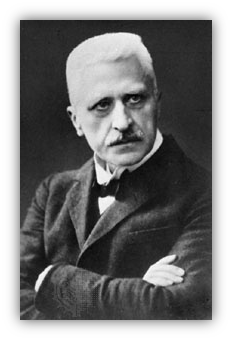
Rudolf Otto (1869–1937) wrote the seminal volume The Idea of the Holy (1917), which had a profound effect on the study of religion. For Otto, the experience of the numinous — the sense of the mysterious and overwhelming sacred — is what underlies all religion. He summarized this experience in the famous phrase mysterium tremendum et fascinans: the mystery that simultaneously overwhelms (tremendum) and fascinates (fascinans).
William James (1842–1910) wrote The Varieties of Religious Experience (1902), which continues to influence understanding of religion. For James, it is precisely the religious or spiritual impulse that makes humans human — it is what separates humanity from the rest of creation.
Mircea Eliade (1907–1986) understood religion as rooted in an experience of “the sacred.” This idea of “the sacred” underlies religious behaviour — it is its cause, not its effect. Importantly, for Eliade, religion is understood as sui generis: extraordinary, inscrutable, and common to all humans.
Functional Definitions
Functional definitions focus less on definitive answers about what religion is and more on what religion does within human society.
Karl Marx (1818–1883) looked at religion as having a social function. His famous observation from your text captures his view: “Religion is the sigh of the oppressed creature, the heart of a heartless world, just as it is the spirit of a spiritless situation. It is the opium of the people.” For Marx, religion served to pacify the working class and distract them from the real conditions of their exploitation.

Sigmund Freud (1856–1939) regarded religion as an illusion — a way for the unconscious mind to fulfill its own wishes or repress its deeper desires. He saw religion as a collective neurosis rooted in the human desire for a powerful father figure.
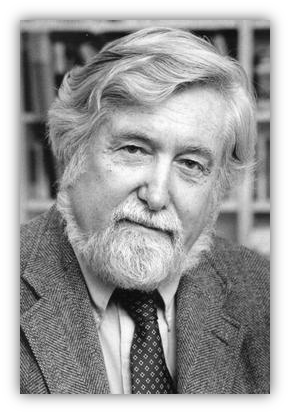
Clifford Geertz (1926–2006), by contrast, was not as reductionistic as Marx and Freud. The anthropologist Geertz looked at religion as a system of symbols. His method of “thick description” — observing not just what people do but the rich layers of meaning they attach to what they do — enabled scholars to examine the objects of religious experience without reducing them to their fundamental status or nature.
Stipulative Definitions
Given that the different authors in your textbook focus on various aspects of religion — social, historical, cultural, political — this course follows a stipulative definition, a useful working definition that may change over time, based on the work of Bruce Lincoln and Thomas Tweed:
Religions are systems of discourses, practices, communities, and institutions that draw on human and suprahuman powers to provide adherents access to ultimate meaning.
Note that the term “suprahuman” is used here instead of “God” or “gods.” This allows for the suspension of judgement about whether such beings exist while acknowledging that religions typically include such notions. It also allows a wide variety of ideas of the suprahuman to be included, beyond strictly theistic notions of divinity.
How Do We Study Religion?
Religious studies is a subject field rather than an academic discipline, and thus has no prescribed methodology. Instead, it relies on methods from sociology, anthropology, psychology, philosophy, history, linguistics, gender studies, and many other sub-disciplines. Several major approaches are particularly important:
Smart’s Seven Dimensions of Religion
Ninian Smart’s phenomenological framework identifies seven dimensions present across religious traditions:
| Dimension | Description | Examples |
|---|---|---|
| Ritual | Re-enacting myths and expressing beliefs through action | Worship, rites of passage, regular gatherings |
| Experiential | Feelings evoked by ritual, prayer, worship — awe, mystery, ecstasy | Mystical experiences, conversion |
| Mythical | Sacred stories transmitted across generations explaining ultimate reality | Creation myths, epic narratives |
| Doctrinal | Systems of belief about the nature of the divine and human relationship to it | The Trinity, Bodhisattva vows |
| Ethical | Rules and precepts guiding conduct | The Ten Commandments, Five Precepts |
| Social | Organization through which a tradition perpetuates itself | Churches, temples, mosques, monasteries |
| Material | Physical buildings, implements, art, and sacred geography | Cathedrals, mandalas, sacred mountains |
Sociological Approaches
Sociological approaches insist on studying religion objectively, examining how race, gender, age, economics, institutions, and politics interact with religious belief and practice.
Anthropological Approaches
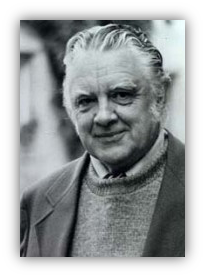
Anthropologist Victor Turner did extensive fieldwork in Africa and wrote extensively on rites of passage. A rite of passage is a ceremony marking a person’s transition from one status or role to another. Turner identified three stages: separation from the old status, a liminal period in between, and incorporation into the new status. The Hajj, the Muslim pilgrimage to Mecca, is a classic example — pilgrims leave their everyday lives, undergo the transforming experience of pilgrimage, and return changed.
Phenomenological Approaches
Phenomenological approaches come from the Greek phainomenon, “that which appears.” In approaching religion, it is the religious phenomenon itself — the “data” — rather than explaining that data through sociological, anthropological, or psychological lenses, that forms the focus. Truth judgements — judging people about their beliefs, their religion, or their religious practices — must be avoided.
Postcolonialism
Postcolonialism raises important “questions about who and what has been historically included or excluded in the study of religion.” Postcolonial scholars seek to identify and analyze the social, political, economic, and cultural practices that arise in response to — and resistance to — colonialism. The study of religion was deeply shaped by European colonial power, and scholars must constantly interrogate whose voices, experiences, and traditions have been privileged or marginalized in the process.
Feminism-Based Approaches
Feminist scholars have insisted that scholarship in the realm of religion has been neither gender-balanced nor gender-inclusive. Women’s roles in religion, and scholarship on women in religion, has largely been overlooked. This course takes women and religion seriously; each module includes a focus on women’s place within the tradition being studied.
Conclusion: Religion in Canada
Throughout this course, we will look at Asian religious traditions both within the countries of their birth and within the Canadian context. Canada’s religious landscape is in flux: while more people are rejecting religion or finding it irrelevant, immigration has transformed Canada’s religious scene. The fastest growing faith communities include Muslims, Hindus, Buddhists, and Sikhs. Religion is particularly important to many young people — whether Evangelical Christian or within other religious traditions. Understanding this diversity is essential for life in twenty-first-century Canada.
Module 2: Hinduism — Weeks 2–4
Why Study Hinduism?
Hinduism is one of the oldest, most varied, complex, and fascinating religious traditions in the world. Understanding its core concepts also illuminates other Indian traditions — Sikhism, Buddhism, and Jainism all share conceptual vocabulary with Hinduism, even where they diverge from it. Many of the central tenets or practices stemming from Hinduism have moved from their traditionally religious context into popular culture, especially outside of India. Terms like “karma” and “yoga” are deeply rooted in Hinduism, yet most people in the West encounter them without any immediate connection to the tradition. One of the goals of this module is to contextualize these important concepts within the rich tradition from which they emerge.
The Beginnings: The Indus Valley Civilization
Hinduism does not have a single founder or a fixed founding date. The beginnings of what we call Hinduism today are traced to the Indus Valley Civilization, the sophisticated early urban culture centred on the cities of Harappa and Mohenjo-Daro, which flourished around 2500–1500 BCE in what is now Pakistan and northwestern India. These cities showed remarkable levels of urban planning, standardized weights and measures, and cultural continuity. While we know a great deal about the physical culture of this civilization, much about its religious life remains a matter of scholarly debate.
The religion that emerged on the Indian subcontinent has been called Sanatana Dharma — “the eternal teaching” — by its adherents, a term that emphasizes its claim to being an eternal, universal tradition rather than a human-founded religion with a historical starting point.
Hindu Scriptures
The Vedas
The oldest Hindu scriptures are the Vedas, or Samhitas, a collection of hymns, priestly texts, and philosophical dialogues composed in Sanskrit, the sacred language of the Brahmins. The Vedas are organized into four main collections:
- Rig Veda: A collection of hymns to the deities, including hymns to Agni (fire), Indra (king of the gods), and Soma (a sacred ritual drink). The hymns are among the oldest religious texts in the world.
- Sama Veda: Verses adapted from the Rig Veda for ritual chanting.
- Yajur Veda: Ritual formulas for priests.
- Atharva Veda: Spells, charms, and philosophical hymns.
Each Veda has associated texts: the Brahmanas (priestly instructions for rituals), the Aranyakas (“forest texts” for ascetics), and the Upanishads (philosophical dialogues on the nature of ultimate reality).
Mantras
Parts of Vedic hymns are mantras — repetitive sounds used to focus the mind. Hindus believe that the sound vibrations of mantras affect the depths of the unconscious mind and the entire being of the practitioner. The Gayatri Mantra, one of the most beloved of all Hindu mantras, addresses the divine as the giver of life, the remover of pain and sorrow, and the guide who illuminates the mind on the right path.
The Great Epics
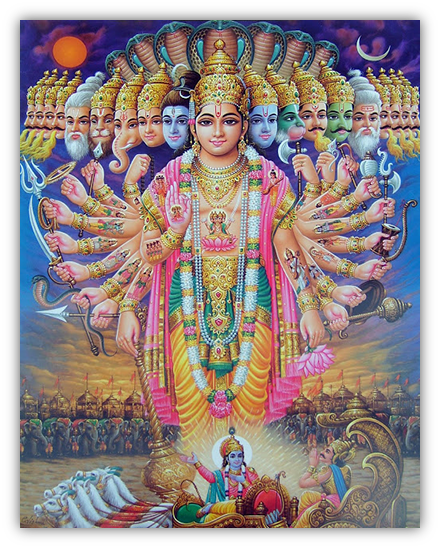
The Mahabharata, one of the longest epic poems in world literature, tells the story of a great dynastic war between two branches of the Bharata family: the Pandavas and the Kauravas. Its central characters include the five Pandava brothers, the deity Krishna, and the villainous Duryodhana. Embedded within the Mahabharata is the celebrated Bhagavad Gita — “Song of the Lord” — a philosophical dialogue between the warrior Arjuna and his charioteer Krishna, who is revealed to be the supreme deity, Lord Vishnu, in human form.
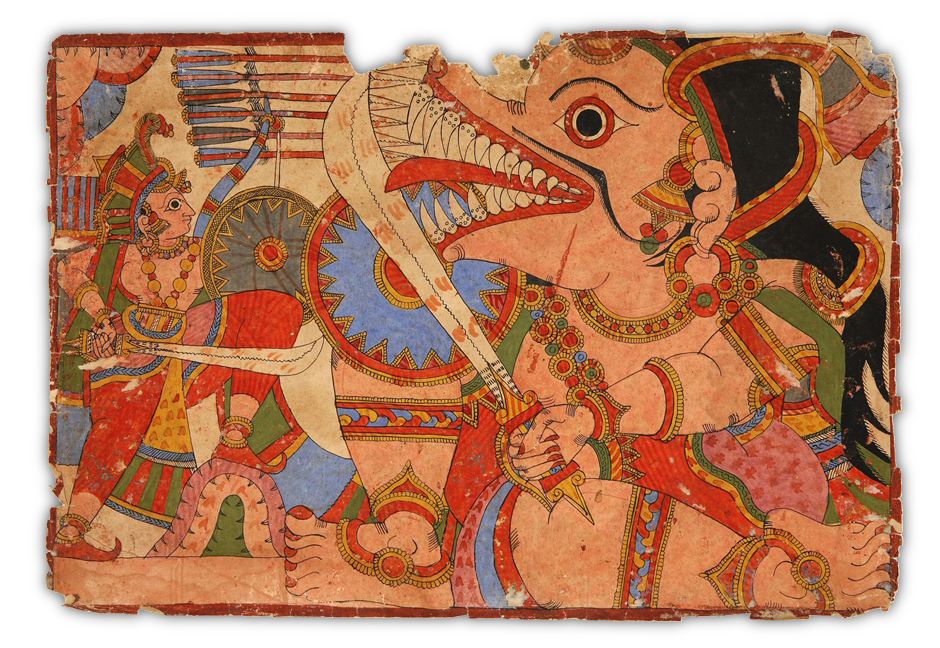
The Bhagavad Gita is one of the most loved and widely read Hindu texts. On the eve of battle, Arjuna despairs at the prospect of fighting and killing his kinsmen. Krishna’s response forms one of the most profound expositions of Hindu philosophy: he teaches that the self (atman) is eternal and cannot be killed; that Arjuna must fulfill his dharma as a warrior; and that action done without attachment to its fruits — nishkama karma — is the path to liberation.
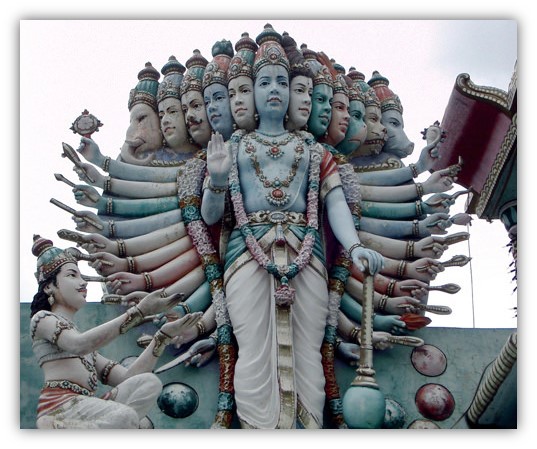
The Ramayana tells the story of Prince Rama, an avatar of Vishnu, and his wife Sita, who is abducted by the demon king Ravana. Rama, aided by the monkey-warrior Hanuman, rescues Sita. Rama and Sita are presented as ideals: Rama is the perfect king and husband; Sita, the ideal wife. However, multiple perspectives exist about Sita’s role and the representation of women in the Ramayana, and feminist scholars have challenged the text’s portrayal of the ideal woman as defined entirely by her relationship to her husband.
The Four Yogas
The Bhagavad Gita concludes with Krishna’s teaching on the four major paths (yogas) to moksha — liberation from the cycle of rebirth:
| Yoga | Path | For Whom |
|---|---|---|
| Jnana Yoga | Path of knowledge/wisdom | The intellectual |
| Bhakti Yoga | Path of devotion and love | The emotionally inclined |
| Karma Yoga | Path of selfless action | The active personality |
| Raja Yoga | Path of meditation and discipline | The contemplative |
Key Concepts in Hindu Philosophy
Brahman is the ultimate, impersonal cosmic reality — the ground of all being. Atman is the individual soul or self. A central insight of the Upanishads is that Atman is Brahman — the individual soul and the universal soul are ultimately one and the same.
Karma (lit. “action”) refers to the law of cause and effect: every action has consequences that ripple through future lives. Unlike the Jain conception of karma as physical matter, Hindu karma is more psychological and spiritual — it is the moral weight of one’s actions.
Samsara is the cycle of birth, death, and rebirth in which all beings are caught until they achieve liberation. Moksha is liberation from this cycle — the ultimate goal of Hindu spiritual practice.
Dharma refers to the cosmic order, the moral and social law, and the specific duties associated with one’s caste, age, and gender. The Manusmriti (Laws of Manu) is the most important text codifying these duties.
The Caste System and Varna
The varna system divides society into four broad categories:
| Varna | Traditional Role |
|---|---|
| Brahmins | Priests and teachers |
| Kshatriyas | Warriors and rulers |
| Vaishyas | Merchants and farmers |
| Shudras | Laborers and servants |
Beyond the varna system are those considered “outside” it — historically called “untouchables” and today more properly referred to as Dalits — who performed work considered ritually impure. The caste system has been deeply controversial both within India and in the diaspora. While some view varna as a divinely sanctioned ordering of society rooted in the cosmic creation myth of Purusha (from whom the four varnas were created), many scholars, social reformers, and Dalit activists have pointed to its history of discrimination and oppression.
A distinction is sometimes made between the varna system (the theoretical four-fold division) and the jati system (the actual hundreds of hereditary occupational groups in practice). The two terms are often conflated under the general term “caste.”
Hindu Concepts of the Divine
One of the most distinctive aspects of Hinduism is its complex understanding of the divine — simultaneously one and many. The ultimate reality is Brahman, the impersonal absolute. Yet this ultimate reality expresses itself through an extraordinary variety of gods and goddesses, none of which are separate from Brahman but are rather different facets of a single infinite reality.
The three major deities of the Hindu Trimurti (divine triad) are:
- Brahma, the creator, who fashioned the universe from chaos
- Vishnu, the preserver, who maintains cosmic order through periodic avatars (divine incarnations) — most notably Rama and Krishna
- Shiva, the destroyer and transformer, who dissolves the universe so that it can be recreated
Among the most important goddesses is Lakshmi, goddess of wealth and prosperity, closely associated with Vishnu. Saraswati, goddess of knowledge and the arts, is associated with Brahma. The powerful goddess Durga embodies the fierce energy of the divine feminine (shakti). Her most celebrated form is Kali, the destroyer of evil forces.
Important Hindu symbols include the OM (representing the primordial sound of the universe), the swastika (an ancient symbol of good fortune, predating its appropriation by the Nazis), the bindi (the dot worn on the forehead, associated with the third eye), and the lotus (symbolizing purity and spiritual awakening).
India’s Medieval Period: The Bhakti Movement
Medieval India (roughly the sixth to the sixteenth century) saw a profound transformation in Hindu religiosity. The Bhakti movement — whose name comes from the Sanskrit bhaj, meaning “to share in” or “to love” — emphasized intense, personal, devotional love of God as the primary path to moksha. Bhakti devotees, known as bhaktas, rejected caste distinctions and the authority of Brahmin priesthood, insisting that sincere devotion of the heart was available to anyone, regardless of social status.
Poet-saints known as bhaktas wandered throughout India during this period, reciting and singing their poetry of divine love to anyone who would listen. Among the most celebrated was Mirabai (ca. 1498–ca. 1546), a Rajput princess who abandoned her royal life to wander as a devotee of Krishna. Her poems express the longing of the soul for union with the Divine through the metaphor of romantic love:
Sister, I had a dream that I wed / the Lord of those who live in need… / Mira’s been granted her mountain-lifting Lord: / From living past lives, a prize.
Kabir, a Muslim weaver from northern India, is considered by many to be the fountainhead of the Bhakti movement in North India. Drawing from both Hinduism and Islam, he was critical of both religions — insisting that true devotion of the heart, as opposed to outward ritual, was central to achieving moksha. His poems, known as bhajans, have been passed down through generations:
Open even a slit in your veil / and you will see the Beloved. / On every step that leads / to the river he wanders.
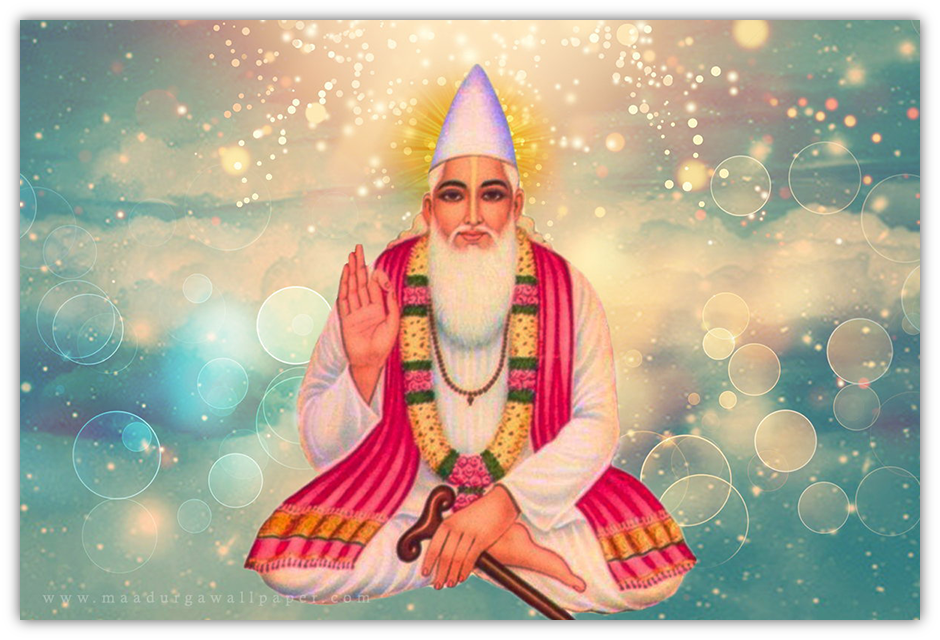
Today, bhakti/devotion is central to how many Hindus understand their relationship to the divine. Devotees of Vishnu in his many avatars (especially Krishna and Rama) are called Vaishnavites; those worshipping Shiva are Shaivites; followers of the feminine divine are Shaktas.
Puja: Hindu Worship
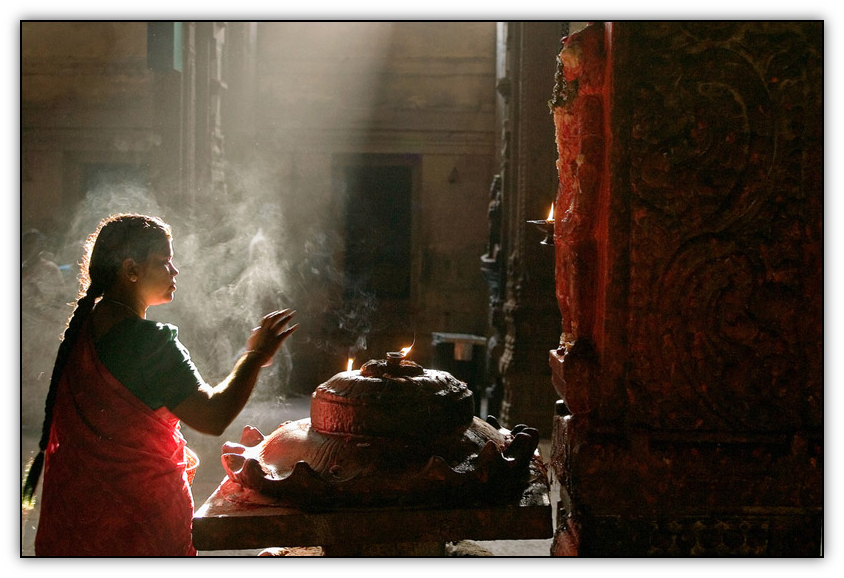
Puja — worship — is the central form of devotional activity for Hindus. At its centre is the murti, the image of the particular form of the divine being worshipped. Pujas can take place in the home, outdoors, or in the temple. The sixteen steps of puja (shodashopachara) systematically honour the deity by welcoming them as a royal guest: awakening the deity, offering water to wash the feet and hands, presenting food, cloth, flowers, incense, and light, and expressing devotion through prayer and music.
Samskaras: Life Cycle Rituals
There are sixteen samskaras (life cycle rituals) in Hinduism, including:
Upanaya (Sacred Thread Ceremony): The central initiation ritual for young teenage boys of the upper three varnas. The boy receives a sacred thread worn across the chest, representing his three duties: to God, to his parents, and to his guru or teacher. This ceremony initiates him into the period of the brahmacharya — the student stage of life — and marks his entry into the twice-born (dvija) community.
Marriage: A complex ceremony involving multiple rituals, including the saptapadi — the seven steps taken together around the sacred fire — through which the couple becomes bound.
Death Rituals: Hindus cremate the body, believing that fire frees the soul for its next journey. In India, the eldest son lights the funeral pyre, invoking Agni, the god of fire. The body is covered with ghee (clarified butter) and offered water and rice balls. In North America, city bylaws and technology have modified these rituals, though fire and mantras remain central.
Hindu Festivals
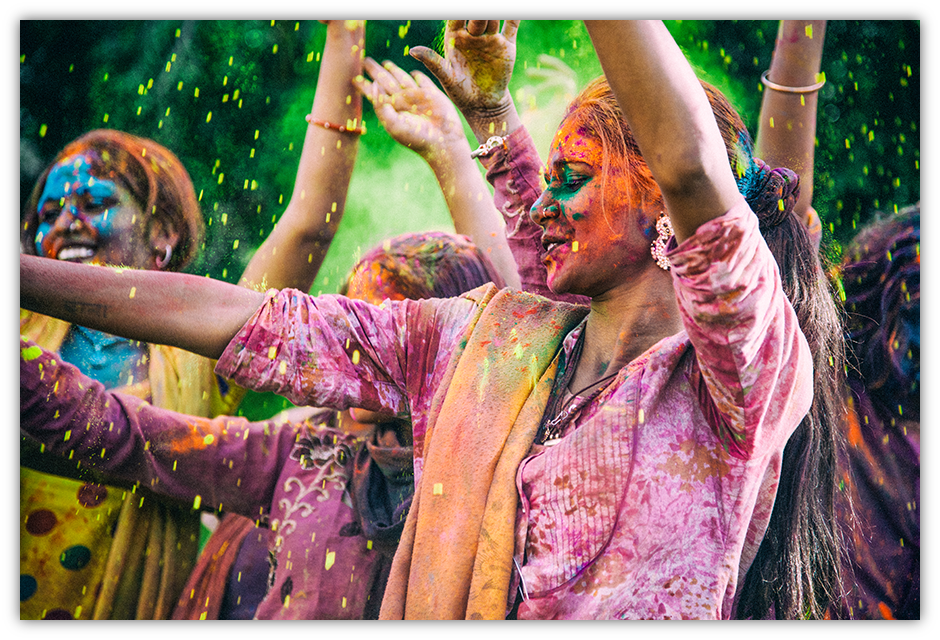
Holi — the Festival of Colours — is an annual festival celebrated on the day after the full moon in March. The throwing of coloured powders and water, the building of public bonfires, and general merrymaking celebrate spring and are connected to events in Hindu mythology. Holi is a time of “turning the world upside down,” challenging traditional social norms.
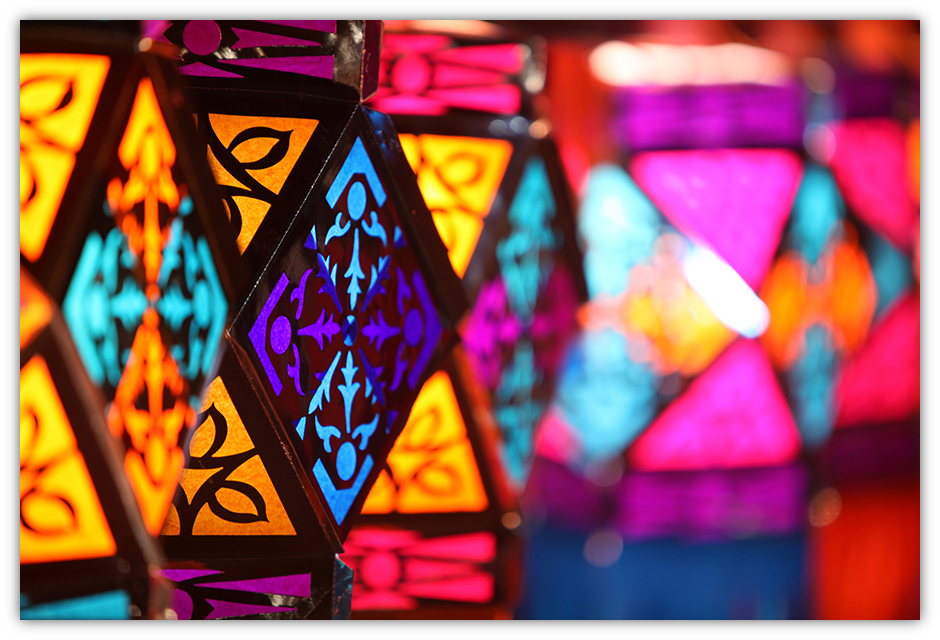
Diwali — the Row of Lights — celebrates the victory of the forces of light over the forces of darkness and is the largest festival in all of India. The goddess Lakshmi is particularly central to Diwali celebrations, as she is invited into homes illuminated by lamps, candles, and oil diyas.
Modern Hinduism
The Colonial Encounter
When we speak of Hinduism’s “modern period,” we must understand the deep impact of British colonialism on India. The British educational system, Christian missionary critique of Hindu practices, and the general ideology of colonial superiority forced a profound re-examination of Hindu identity among educated Indians.
Two important reformers of this period were:
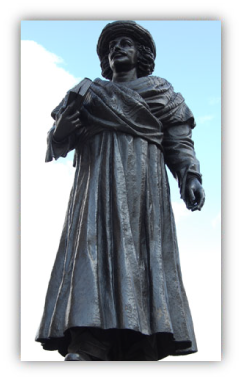
Ram Mohan Roy (1772–1833), who founded the Brahmo Samaj movement in Calcutta in 1828. Roy was deeply influenced by Enlightenment rationalism and sought to reform Hinduism by rejecting idolatry, polytheism, and the caste system. He was instrumental in convincing the British to ban sati (the practice of widow immolation on a husband’s funeral pyre) in 1829. The Brahmo Samaj supported widow remarriage and the spread of Western knowledge.
Swami Dayananda Saraswati (1824–1883) founded the Arya Samaj, a reform movement that sought to return Hinduism to what Dayananda considered the pure, uncorrupted teachings of the Vedas. Unlike the Brahmo Samaj, the Arya Samaj rejected Western influence and emphasized the authority of the Vedas over later texts and practices.
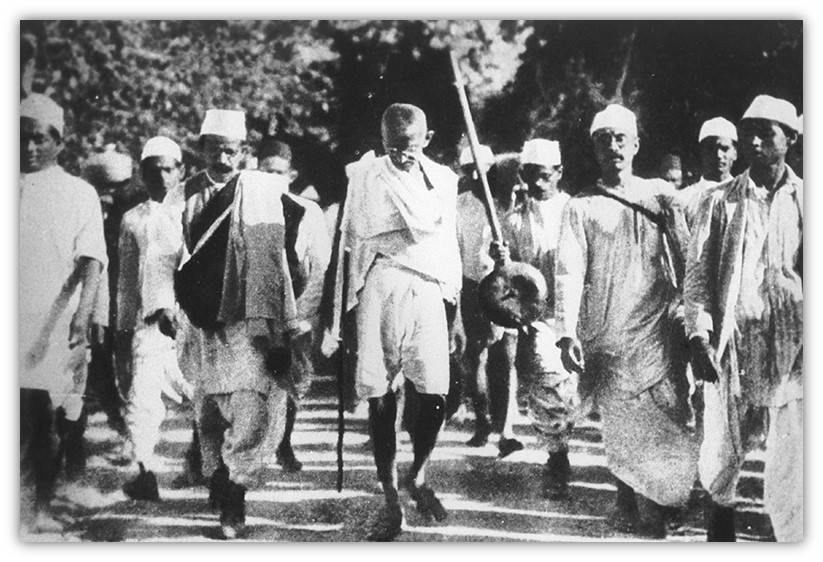
Mahatma Gandhi (1869–1948), the Father of Independent India, was the most important figure combining both the reformation of Hinduism and the rise of Indian nationalism. Gandhi’s concept of satyagraha — “truth force” or nonviolent resistance — drew directly from the Hindu notion of ahimsa (non-violence), particularly as understood in the Jain tradition. Gandhi’s campaigns of civil disobedience, including the famous Salt March of 1930, ultimately helped bring down the British Empire in India.
The Partition of India in 1947, which gave birth to Pakistan (and later Bangladesh), was one of the greatest humanitarian catastrophes of the twentieth century, resulting in the displacement of approximately 14 million people and the death of between 200,000 and 2 million.
Hinduism in Canada
Hindus form only about 1.5 percent of Canada’s population — just under 500,000 people — a dramatic contrast to the nearly 80 percent of India’s population that identifies as Hindu. Canada’s Hindu community is largely rooted in immigration from the Indian subcontinent since the mid-twentieth century.
The first major encounter of Hinduism in North America came through the World Parliament of Religions in Chicago in 1893. There, Swami Vivekananda gave a rousing speech about Hinduism that sparked immense interest in both the man and the religion he represented. Vivekananda went on to found the Ramakrishna Mission in the West.
In 1966, A. C. Bhaktivedanta Swami Prabhupada founded ISKCON — the International Society for Krishna Consciousness, also known as the Hare Krishna movement — in New York. This radical devotional movement, largely composed of Western converts, brought bhakti devotionalism to the streets of North American and European cities. One of ISKCON’s most famous adherents was George Harrison of The Beatles, who played a significant role in bringing Hare Krishna chanting to mainstream Western audiences.
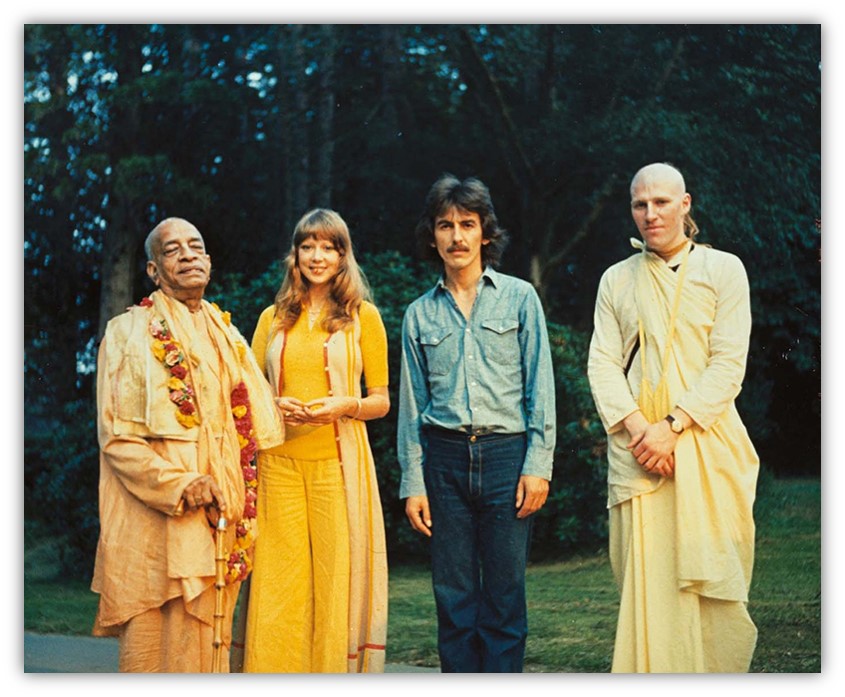
In Canada, Hindus have brought much of their religio-cultural heritage with them from India — temples have been established, dance is offered as a form of devotion in the bhakti tradition, and festivals like Diwali are celebrated publicly. Note that in Canadian Hindu temples, chairs are often set up for the congregation — an adaptation to North American customs that would not be seen in India, where people traditionally sit on the floor.
Module 3: Jainism — Week 5
Why Study Jainism?
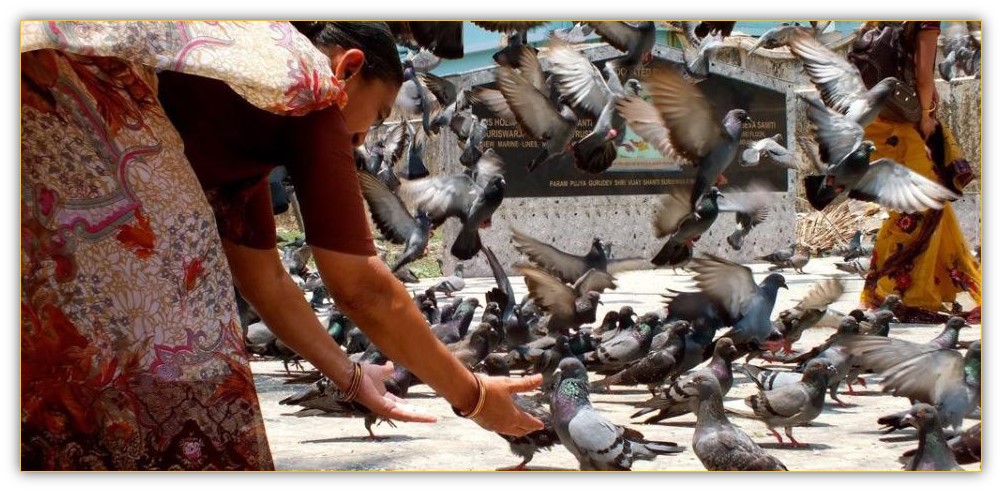
Jainism is one of the oldest traditions of India. Despite its relatively small size — roughly 6 million Jains worldwide — it has had a profound impact on the history of religion. Mahatma Gandhi, though a Hindu, was deeply influenced by the central Jain concept of ahimsa (non-violence). For Jains, non-violence extends far beyond harming human beings to include animals, plants, and even micro-organisms. All life is sacred.
Jainism is also remarkable because it is a religion based on the principle of self-reliance, not on a God or Gods. For most students of religion raised in Abrahamic traditions, this presents a significant and fascinating challenge to assumptions about what religion must involve.
The Beginnings
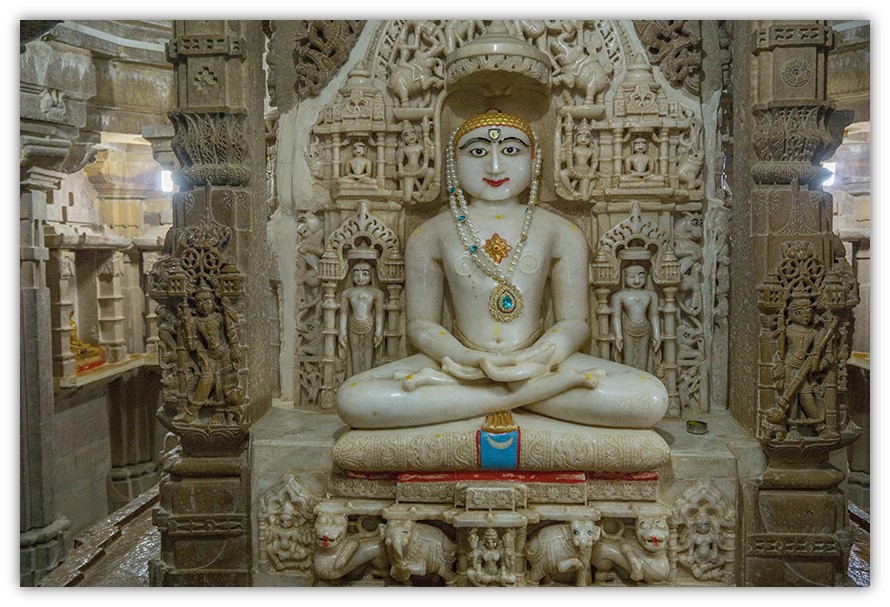
Jainism, like Hinduism, does not have a single historical founder. Scholars focus on Mahavira (ca. 599–527 BCE) — Jina, “the conqueror” — as the historical figure who gave Jainism its current form. Mahavira was the 24th tirthankara — an “ford-maker” or enlightened teacher who has reached a state of perfection through intense practices of meditation and ascetic discipline. For Jains, tirthankaras are not understood as Gods or divine incarnations; they are supremely accomplished humans whose example shows others the path to liberation.
The Two Major Sects
Following Mahavira’s death, disagreements over monastic practice led to a division between two major branches:
- Digambara (“sky-clad”): Monks of this sect practice nudity as a form of complete non-attachment to worldly things. Digambara monks cannot own books, must beg for food, and believe women cannot attain liberation in a female body.
- Svetambara (“white-clad”): Monks and nuns of this sect wear white robes. Svetambaras include women fully in the monastic order and believe liberation is available to both sexes.
Key Concepts in Jain Philosophy
Karma
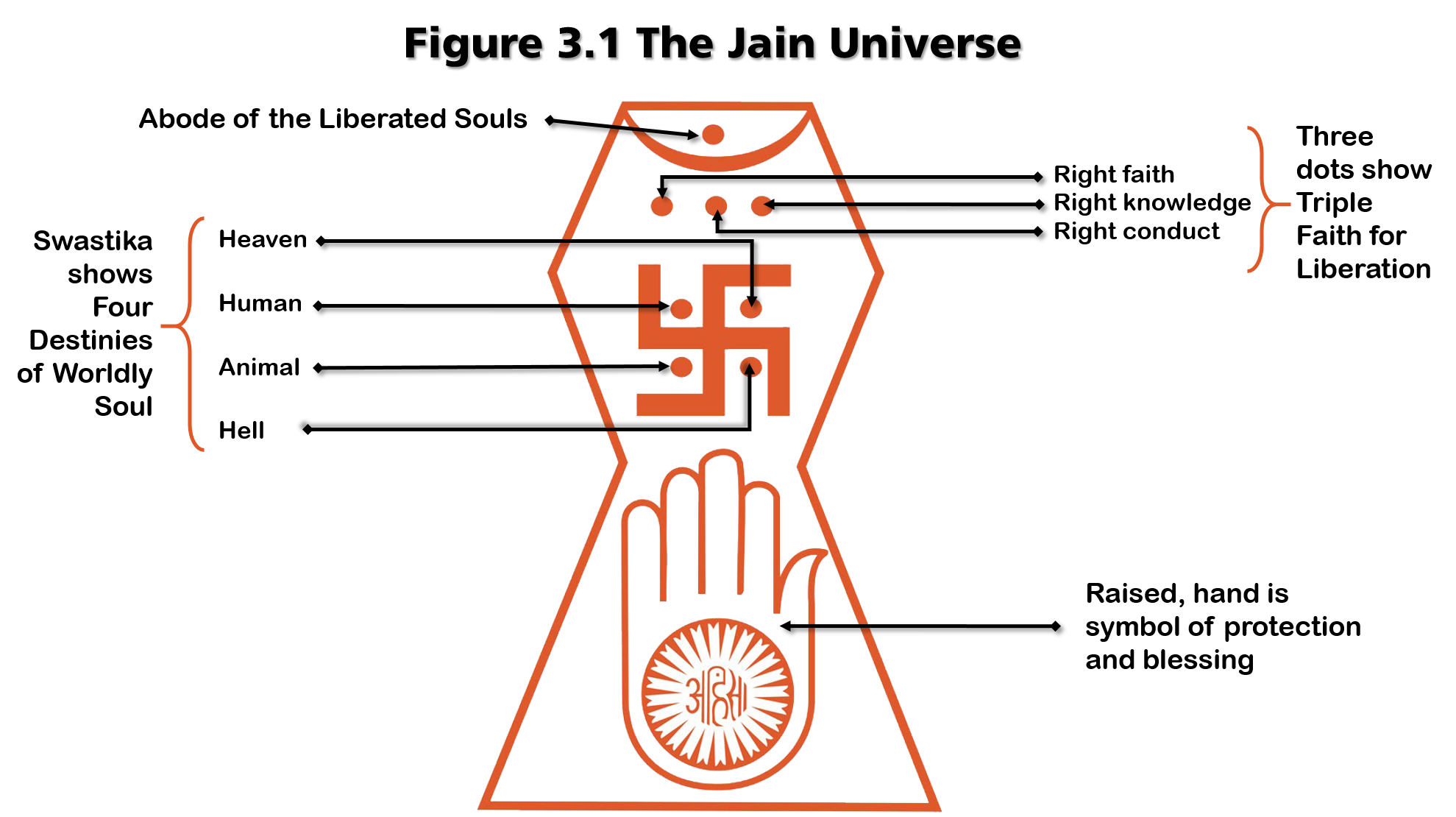
Karma within Jain understanding differs significantly from Hindu and Buddhist conceptions. For Jains, karma is understood as physical matter — microscopic particles that attach themselves to the soul as a result of actions, thoughts, and speech. This is not a metaphorical or psychological interpretation; karma literally weighs down the soul, binding it to the cycle of rebirth.
Jiva (soul) and Ajiva (non-soul) form the fundamental metaphysical division. Everything in the universe is either jiva (conscious, living) or ajiva (non-conscious, material). Karma is a form of ajiva that attaches itself to jiva.
Ahimsa
The principle of ahimsa (non-violence) is the cornerstone of Jain ethics. It informs every aspect of a Jain’s life — what they eat (strict vegetarianism, and for some, veganism and the avoidance of root vegetables that house micro-organisms), what work they do (farming is typically avoided because of harm to soil organisms), how they walk, and how they die. Jain monks sweep the path before them with a soft broom to avoid stepping on insects.
Jain Cosmology
Uniquely, Jainism holds that the universe has no beginning and no end. As your text notes: “The universe and all that it contains may constantly change form, but the contents of the universe were never created — they have always existed and will always exist.” The universe is understood as having ascending and descending phases of time, called utsarpini (ascending half-cycle) and avasarpini (descending half-cycle).
Sallekhana
Sallekhana is the Jain practice of voluntary fasting to death — a peaceful and deliberate withdrawal from the body when one’s physical capacities have become too limited to pursue one’s spiritual practice. This is not regarded as suicide; it is understood as the ultimate expression of non-attachment and the highest form of ahimsa — causing no further harm to any creature, including oneself.
Jain Practices
Monastic and Lay Life
Jainism is an ascetic tradition. Jain monks and nuns have significantly different roles and practices from the Jain laity (householders). The five vows of Jain monastics are:
- Ahimsa (non-violence): Absolute
- Satya (truthfulness)
- Asteya (non-stealing)
- Brahmacharya (celibacy)
- Aparigraha (non-attachment to possessions): Absolute for Digambara monks
The twelve vows of the Jain householder are less strict versions of these same principles, adapted for life in the world.
Daily Devotion and Temple Worship
Jain daily practice includes meditation, recitation of sacred texts, and visits to Jain temples (derasars). At the temple, Jains perform puja to the tirthankara images. Unique to Jain puja is the absence of any offering of food or incense (which might harm living organisms) — the worship is purely internal and symbolic.
Food and Ahimsa
Jain food practices are among the most carefully regulated in the world. Strict Jains avoid:
- All meat, fish, and eggs
- Root vegetables (onions, garlic, potatoes, carrots, etc.) — which house or attract micro-organisms
- Eating after sunset (when insects are more active and might accidentally be harmed)
- Honey (which requires harming bees)
The relationship between food and faith is profound in Jainism: every meal is an ethical choice that reflects one’s commitment to ahimsa.
Jainism in North America
One of the biggest challenges facing Jains outside of India is the lack of monastics — in the Indian context, monks and nuns are the centre of religious life. Jain monastics cannot travel by automobile, airplane, or other mechanical transport (which might harm micro-organisms), which means they are essentially confined to India. In Canada, the Jain community has focused primarily on establishing temples and lay societies. The Jain community in Toronto has built a landmark temple serving the diaspora community. Through Harvard University’s Pluralism Project, the challenges and adaptations of Jain immigration to North America have been well documented.
Module 4: Sikhism — Week 6
Why Study Sikhism?
Sikhism is a relatively young religion, dating from 1469 with the birth of its founder, Guru Nanak. As a tradition that emerged only five centuries ago, it offers a fascinating window into the development of a religious tradition within a traceable historical time span. Sikhism stands at the very end of the Bhakti movement we learned about in the Hinduism unit — Guru Nanak’s teachings of devotion, egalitarianism, and the importance of the divine name grew directly from the Bhakti and Sufi devotional milieu of medieval north India.
Sikhs have a unique relationship with their sacred scripture, the Guru Granth Sahib, which functions as a living, perpetual Guru for the community. Most Sikh scripture is set to music, giving kirtan (devotional singing) a central role in worship.
The Beginnings: Scripture and the Gurus
The Guru Granth Sahib
Sikh scripture, known either as the Adi Granth (the Original Scripture) or the Guru Granth Sahib (a confessional statement accepting the Adi Granth as Guru), is absolutely central to the devotional life of all Sikhs. What is unique about this sacred scripture is that it contains writings not only from six of the ten Sikh gurus, but also from poet-saints — bhagats — from both Hindu and Muslim communities. This inclusivity reflects Sikhism’s foundational commitment to egalitarianism and the universality of the divine.
The Adi Granth was originally compiled by Guru Arjan, the fifth guru. Guru Gobind Singh, the tenth and last living guru, compiled the final version and, before his death in 1708, declared that there would be no more human gurus — the guruship would henceforth reside permanently in the scripture itself.
The script of the Guru Granth Sahib is called Gurmukhi, originally a script used by traders. Its adoption by the gurus represented a deliberate commitment to egalitarian ideals — using the vernacular script of the common people rather than Sanskrit, the language of the Brahmin elite.
The Janam-Sakhis
The stories about the first guru, Guru Nanak, come from hagiographic writings called the janam-sakhis — “birth stories.” These are wonderful, often miraculous narratives that demonstrate the uniqueness of Guru Nanak and his timeless message. As with all hagiographic literature, the janam-sakhis tell us more about what the community valued and believed about their founder than they do about strictly historical events.
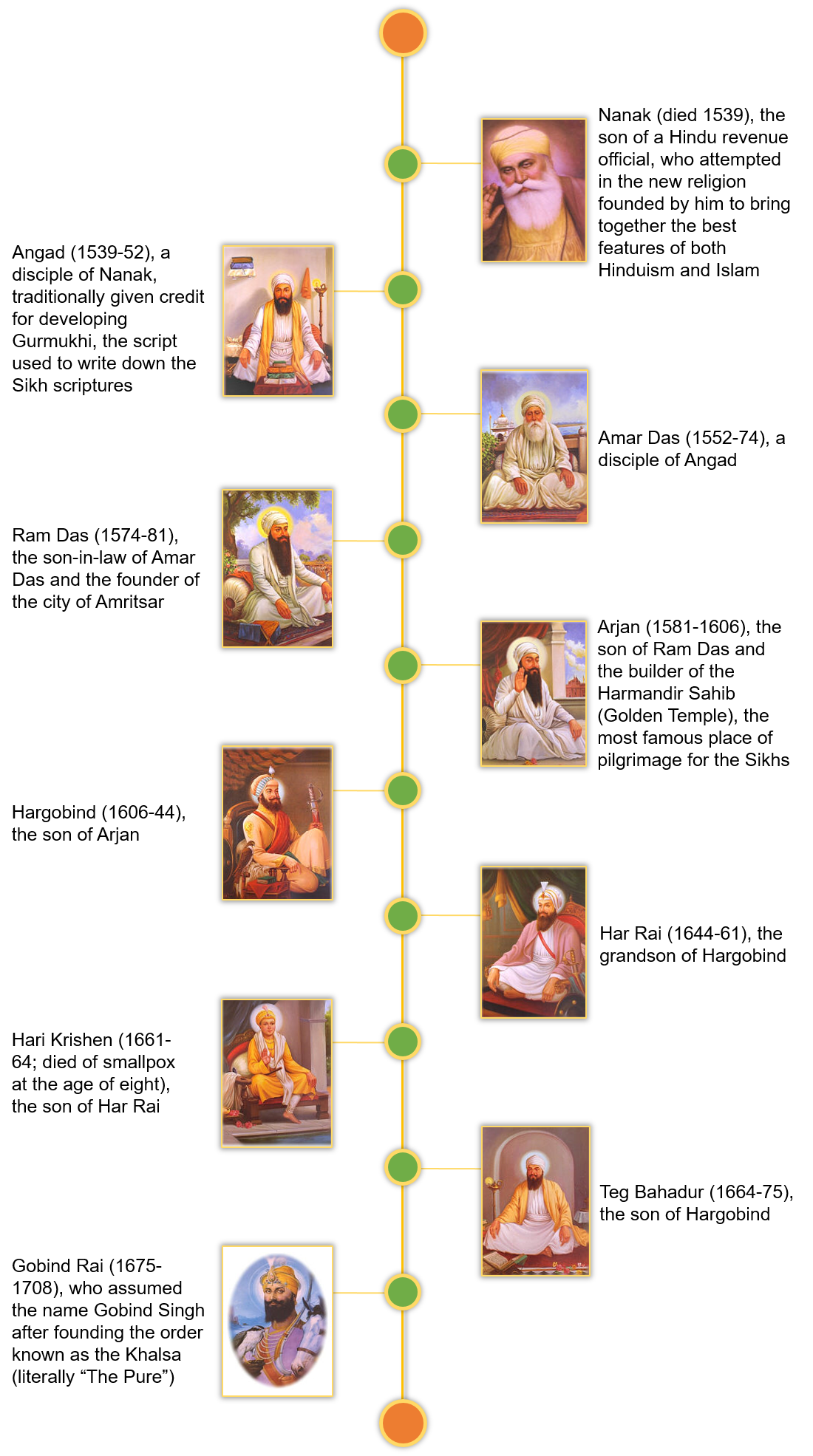
The Ten Sikh Gurus
Sikhs believe that while each of the ten gurus lived at different times, the same divine light or essence shone through them all — “as one lamp lights another.” The ten gurus span from Guru Nanak (1469–1539) through Guru Gobind Singh (d. 1708). Two of them — Guru Arjan and Guru Tegh Bahadur — were executed by the Mughal emperor for political opposition. This history of martyrdom is central to Sikh identity.
The Khalsa
The tenth guru, Guru Gobind Singh, instituted the Khalsa brotherhood at the Vaisakhi festival of 1699. He called five volunteers to give their lives for the faith, then revealed them alive, initiating them into a new community of committed Sikhs. This ceremony — the Amrit Sanchar (initiation by amrit, sweetened water) — remains the central initiation ritual of the Khalsa today.
Initiated Khalsa Sikhs bear the Five Ks (panj kakke), external identity markers:
| The Five Ks | Symbol |
|---|---|
| Kesh | Uncut hair — the natural form God gave to humanity |
| Kangha | A wooden comb — cleanliness and order |
| Kara | A steel bracelet — reminder of one God and the circular eternity of God |
| Kachera | Cotton undergarment — self-restraint |
| Kirpan | A steel sword — readiness to defend the weak |
Sikhs are categorized as: amritdhari (fully initiated Khalsa), keshdhari (those who maintain uncut hair but have not undergone full initiation), and sahajdhari (those who follow Sikh teachings but do not maintain the external symbols).
Sikhs in the Modern Period
The British Raj in Punjab and Partition
The 19th-century British colonization of Punjab profoundly affected Sikh identity and led to major reform movements. The Singh Sabha movement sought to revive and reform Sikhism, leading eventually to the formation of the Shiromani Gurdwara Parbandhak Committee (SGPC) and the codification of the Sikh Reht Maryada — the official code of conduct for Sikhs.
The 1947 Partition of India was one of the greatest tragedies of the twentieth century. Punjab — the Sikh homeland — was divided between India and Pakistan. Approximately 14 million people were displaced, and between 200,000 and 2 million were killed in the communal violence that accompanied partition. The Sikh community was particularly devastated, losing the important holy cities of Lahore and Nankana Sahib (the birthplace of Guru Nanak) to Pakistan.
Sikh Worship
The Gurdwara
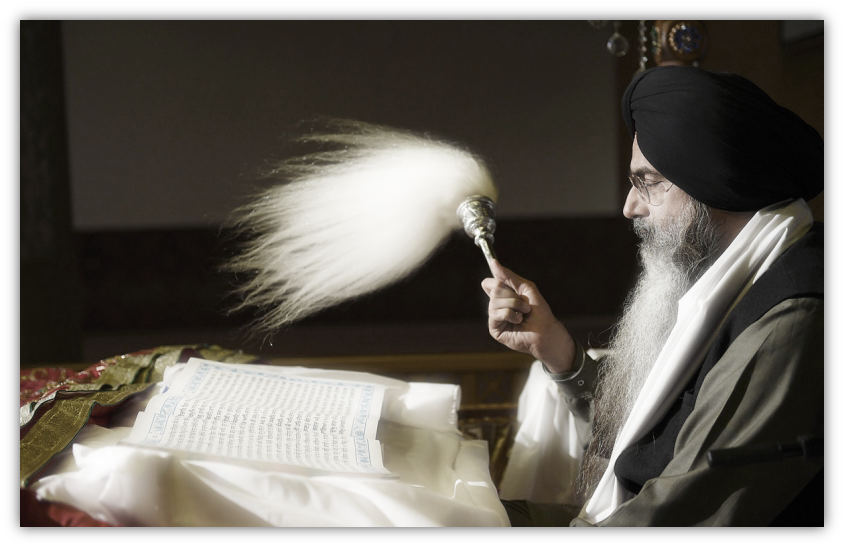
The gurdwara (“door of the Guru”) plays a central role for Sikhs worldwide. Every gurdwara contains the Guru Granth Sahib, which is treated with great reverence — it is placed on a raised platform (palki) under a canopy, and a granthi (reader/priest) fans it with a ceremonial fly-whisk (chaur). Visitors must cover their heads and remove their shoes. The service includes the singing of hymns (kirtan), recitation from the Guru Granth Sahib, and the sharing of karah prashad — a sweet, pudding-like sanctified food made from equal parts whole wheat flour, butter, and sugar.
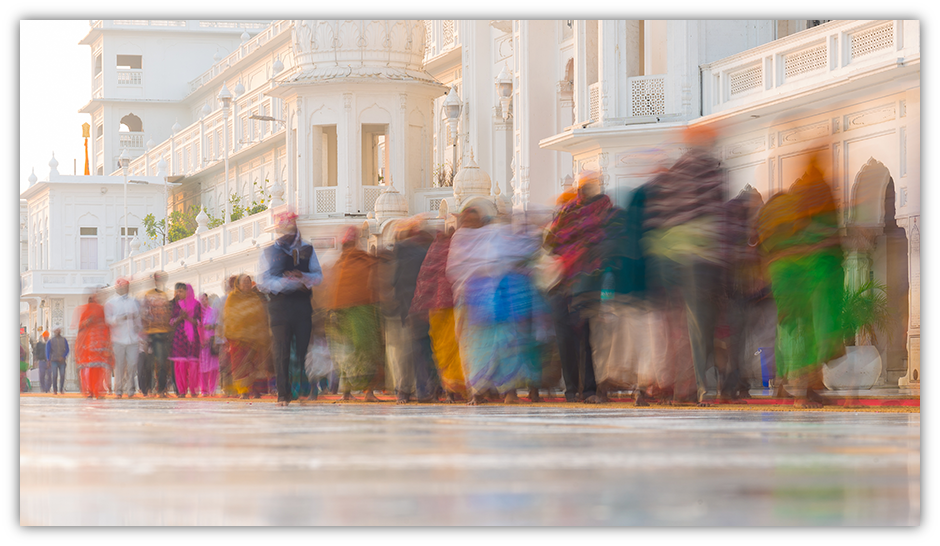
The Harimandir Sahib in Amritsar — the Golden Temple — is the holiest site in Sikhism. It is open on all four sides, symbolizing that the Sikh gurdwara welcomes people of all four directions, all backgrounds, and all faiths.
Kirtan: Sacred Music
Music is absolutely central to Sikh devotional life. Kirtan refers to the devotional singing of hymns from the Guru Granth Sahib. The hymns, called shabads, are set to specific musical modes (ragas) and are typically performed by trained musicians called ragis. Sikh scripture is unique among the world’s religious texts in that it is fundamentally musical — the Guru Granth Sahib is organized not by topic or author, but by musical mode.
As Wikipedia defines it: “Kirtan in Sikh history has been performed by ragi jatha, or professional trained performers. Sikh Kirtan is a religious, aesthetic and social event, usually held in a congregational setting… The congregational setting is called a Sangat or Satsang, a word that in ancient Indian texts means ’like minded individuals, or fellow travelers on a spiritual journey.’”
Langar
One of the most central aspects of seva (selfless service) in Sikhism is the langar — the communal meal served free of charge to anyone who comes to the gurdwara, regardless of caste, religion, gender, or background. The Harimandir Sahib feeds approximately 40,000 people daily, and over 100,000 during festival days, all through volunteer labour and community donations. The concept of langar directly embodies Sikh values of equality and service.
Sikh Rites of Passage and Festivals
Janam Naam Sanskar (Sikh baby naming ceremony): After the birth of a child, the family goes to the gurdwara. The Guru Granth Sahib is opened at random, and the first letter of the first word on the left page becomes the first letter of the child’s name. This practice ensures that names are derived from scripture.
Anand Karaj (Sikh wedding): The central ceremony involves four circumambulations (lavan) of the Guru Granth Sahib while the congregation sings the four stanzas of the Lavan Hymn composed by Guru Ram Das. The couple pledges to walk together through life with God’s word as their guide. As Guru Amar Das wrote: “They are not said to be husband and wife, who merely sit together. Rather they alone are called husband and wife, who have one soul in two bodies.”
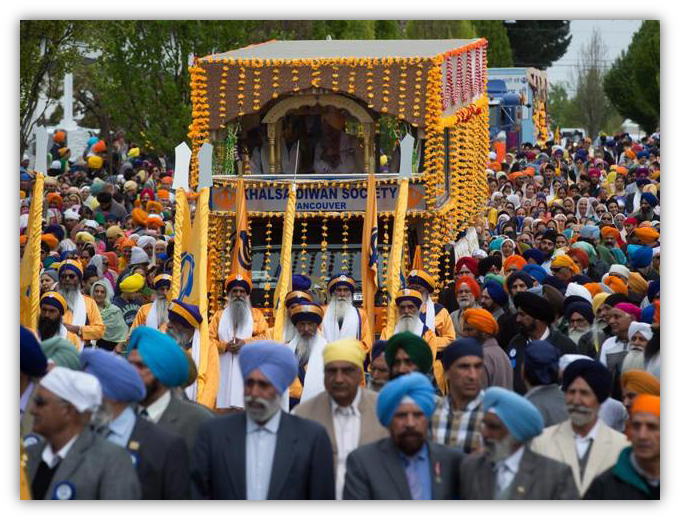
Vaisakhi: This spring festival has dual significance — as a seasonal harvest celebration, and as the anniversary of Guru Gobind Singh’s creation of the Khalsa in 1699. Vaisakhi parades in Canadian cities like Vancouver draw hundreds of thousands of participants.
Death rituals: Sikh death rituals are closely tied to the Guru Granth Sahib. The Kirtan Sohila — “Hymn of Praise” — is sung at night to calm the mind before sleep, and accompanies Sikh death rituals.
Sikh Diversity
Beyond the mainstream Khalsa tradition, there is a wide spectrum of groups within Sikhism:
Namdharis: A group that believes the line of living human gurus did not end with Guru Gobind Singh, and that their current leader is a living guru.
3HO Sikhs (Healthy, Happy, Holy Organization): Founded by Yogi Bhajan in the late 1960s, 3HO draws converts largely from white, middle-class North Americans, teaching a form of Sikhism closely tied to kundalini yoga. Both men and women in 3HO wear white Punjabi clothing and turbans — a practice that differs from mainstream Punjabi Sikhism, where turbans are strongly associated with Sikh men. In recent years, Bhajan’s legacy has been tainted by serious accusations of sexual abuse.
Sikhs in Canada
Sikhs have been present in Canada for over 120 years, arriving initially to work in the lumber industry of British Columbia. However, they have faced severe and systematic discrimination:
- 1908: The Government of Canada passed the Continuous Passage Act, which barred immigration from India by requiring a continuous voyage from a passenger’s country of origin — effectively impossible given shipping routes of the time.
- 1914: The Komagata Maru Incident — a Japanese steamship carrying 376 South Asians (most of them Sikhs) was denied landing rights in Vancouver and forced to return to India, where British colonial authorities killed 19 passengers.
- The Komagata Maru has become a powerful symbol of anti-South Asian racism in Canadian history.
Despite these obstacles, Sikhs have made remarkable contributions to Canadian society through political involvement (including the election of numerous Sikh parliamentarians and cabinet ministers), cultural presence, and economic success.
Module 5: Buddhism — Weeks 7–9
Why Study Buddhism?
Buddhism, along with Jainism, has its origins in India and was in important ways a response to the ritual complexity and caste hierarchy of Vedic religion. Like Jainism, Buddhism does not centre on a creator God; it focuses instead on the individual’s own spiritual discipline and insight as the path to liberation. Buddhism has undergone a remarkable transformation as it has spread throughout Asia and, more recently, to North America — making it one of the most adaptable of the world’s great religious traditions.
The Beginnings: The Life of the Buddha
Siddhartha Gotama Sakya (also known as Shakyamuni — “the sage of the Shakya clan”) is the historical founder of Buddhism, who likely lived around 563–483 BCE. As your textbook notes, a distinction must be made between history and sacred history. Much of what we know about the Buddha comes from sacred narratives — the Jataka tales (stories of the Buddha’s many past lives) and later biographical accounts — in which historical facts are woven into a larger spiritual narrative.
Key events in the Buddha’s sacred biography:
- Born in Lumbini (in present-day Nepal) to a royal family, the infant Siddhartha was prophesied to become either a great world ruler or a great spiritual teacher.
- Shielded from the suffering of the world by his protective father, Siddhartha eventually encountered the Three Signs — an old man, a sick man, and a corpse — that awakened him to the reality of suffering. He also encountered a wandering ascetic, which showed him that liberation was possible.
- At age 29, Siddhartha left his palace, wife, and child and became a wandering ascetic.
- After years of extreme ascetic discipline that brought him near death, he rejected asceticism in favour of the Middle Way — a path between extreme indulgence and extreme deprivation.
- At Bodhgaya (in present-day Bihar, India), seated under the Bodhi tree, Siddhartha attained enlightenment and became the Buddha — “the Awakened One.”
- At Sarnath, he gave his first great sermon, setting in motion the Wheel of the Dharma.
- He died at Kushinagar at approximately age 80, entering what Buddhism calls parinirvana — the final passing.
These four sites — Lumbini, Bodhgaya, Sarnath, and Kushinagar — are the most important pilgrimage sites in Buddhism.
Emperor Ashoka (304–232 BCE), the third ruler of the Mauryan Empire, was enormously important for the spread of Buddhism. After witnessing the horror of a battle he had won, Ashoka converted to Buddhism and spent the rest of his reign promoting the Buddha’s teachings through a series of inscribed rock and pillar edicts placed throughout his empire. He sent Buddhist missionaries to Sri Lanka, Southeast Asia, and beyond.
The Teachings (Dharma) of the Buddha
The Four Noble Truths
The central teachings of the Buddha are organized as the Four Noble Truths, structured like a medical diagnosis: identifying the disease, its cause, the possibility of cure, and the treatment:
The First Noble Truth: Dukkha (suffering/unsatisfactoriness) Suffering is a part of every life. Three forms are identified: ordinary suffering (old age, sickness, death); suffering caused by impermanence (everything constantly changes, nothing lasts); and the suffering of conditional states — the fundamental unsatisfactoriness of conditioned existence.
Central to understanding the first truth is the concept of anatman (“no-self”). In direct contrast to the Hindu concept of atman (the eternal soul), Buddhism teaches that there is no fixed, permanent, essential self. What we call the “self” is actually a constantly changing collection of five aggregates (skandhas):
- Material form
- Sensation
- Perception/cognition
- Mental formations
- Consciousness
The Second Noble Truth: The Origin of Suffering The cause of suffering is tanha — craving, desire, attachment. We cling to things (including our idea of a permanent self) that are fundamentally impermanent. This is rooted in ignorance (avidya) about the true nature of reality.
Closely related is the concept of dependent origination (pratītyasamutpāda): “when this is, that is.” Everything that exists does so in dependence on other conditions — nothing exists independently or inherently. This interconnected web of causes and conditions means there is no permanent, self-subsisting entity anywhere in the universe.
The Third Noble Truth: The Cessation of Suffering Suffering can end. If attachment to desire ends, so too will suffering. If we truly understand the impermanent, non-self nature of reality, we can live a life of compassion and insight. The goal is nirvana (Sanskrit) or nibbana (Pali) — “blowing out” the fires of craving, hatred, and delusion.
The Fourth Noble Truth: The Eightfold Path The path to the cessation of suffering is the Noble Eightfold Path, also called the Middle Way:
| Step | Category |
|---|---|
| Right Understanding — seeing things as they are | Wisdom |
| Right Intent — commitment to compassion and renunciation | Wisdom |
| Right Speech — avoiding lies, gossip, divisive speech | Ethics |
| Right Conduct — following the Five Precepts | Ethics |
| Right Livelihood — avoiding work that causes harm | Ethics |
| Right Effort — cultivating wholesome qualities | Meditation |
| Right Mindfulness — maintaining awareness of present moment | Meditation |
| Right Meditation — developing concentrated mental focus | Meditation |
The Five Precepts
The Five Precepts are the basic ethical guidelines for all Buddhists:
- Not to harm living beings
- Not to take what is not given
- To avoid sexual misconduct
- Not to lie
- To abstain from intoxicants
The Buddha teaches: “The thought manifests as the word / The word manifests as the deed / The deed develops into habit / And the habit hardens into character. / So watch the thought / And its ways with care / And let it spring from love / Born out of respect for all beings.”
The Three Jewels and the Sangha
Buddhists take refuge in the Three Jewels (or Three Refuges):
- The Buddha — the historical teacher and the ideal of enlightenment
- The Dharma — the teachings of the Buddha
- The Sangha — the community of practitioners
The Sangha — the monastic community — is governed by the Vinaya, the code of monastic rules. Women were admitted to the sangha approximately five years after the first ordination of monks. The admission occurred after the Buddha’s aunt Mahaprajapati (his wet nurse after his mother died) persistently requested admission. He refused several times before being persuaded, though he reportedly said that admitting women would shorten the lifespan of the dharma by five hundred years — a statement that has been deeply contested by Buddhist feminist scholars.
The Three Major Strands of Buddhism
Theravada Buddhism (“the Way of the Elders”)
Theravada is the oldest surviving school of Buddhism, based on the Pali Canon — the earliest surviving collection of the Buddha’s teachings, written in the Pali language. It is dominant in South and Southeast Asia (Sri Lanka, Thailand, Myanmar, Cambodia, Laos).
In Theravada, the ideal spiritual hero is the arhat — a person who has achieved nirvana through their own disciplined effort. The emphasis is on individual liberation through monastic practice.
Mahayana Buddhism (“the Great Vehicle”)
Mahayana emerged around the first century BCE and became dominant in East Asia (China, Japan, Korea, Vietnam). Mahayana uses the Pali Canon plus a large body of new scriptures, many of which are presented as the Buddha’s hidden teachings revealed at a later time.
The ideal of Mahayana is the bodhisattva — a being who has attained enlightenment but has vowed to remain in the cycle of rebirth to help all sentient beings achieve liberation. This emphasis on compassion for all beings — not just individual salvation — distinguishes Mahayana from Theravada.
Important Mahayana concepts include Buddha nature (tathagatagarba) — the teaching that all beings inherently possess the potential for Buddhahood — and the Trikaya doctrine, which describes three “bodies” of the Buddha: the historical form body, the cosmic enjoyment body, and the absolute nature body.
| Feature | Theravada | Mahayana |
|---|---|---|
| Scripture | Pali Canon | Pali Canon + new texts |
| Buddha | Historical human | Cosmic principle |
| Ideal | Arhat (individual liberation) | Bodhisattva (universal liberation) |
| Means | Work out your own salvation | Merit transfer, grace available |
| Geographic emphasis | South/Southeast Asia | East Asia |
Vajrayana Buddhism (“the Diamond/Thunderbolt Vehicle”)
Vajrayana emerged within Mahayana and is dominant in Tibet, Mongolia, and parts of Nepal and Bhutan. It is also called Tantric Buddhism because it incorporates tantra — esoteric ritual practices passed from teacher to student, designed to accelerate the path to enlightenment.
Central to Vajrayana are:
- Mantras: Sacred sound formulas, most famously Om Mani Padme Hum (“Hail, jewel in the lotus”) — the mantra of Avalokiteshvara, the Bodhisattva of Compassion.
- Mandalas: Geometric diagrams of the cosmos, representing the pure land of a particular Buddha or bodhisattva, used in meditation and ritual.
- Mudras: Ritual hand gestures that channel spiritual energy.
- Prayer wheels: Cylinders containing prayers or mantras, spun as an act of prayer.
- Thangkas: Painted scroll-images of deities and mandalas used in meditation.
- The Guru: In Vajrayana, the relationship with a qualified teacher (lama) is of supreme importance; it is only through the guru’s transmission that tantric practices can be properly received.
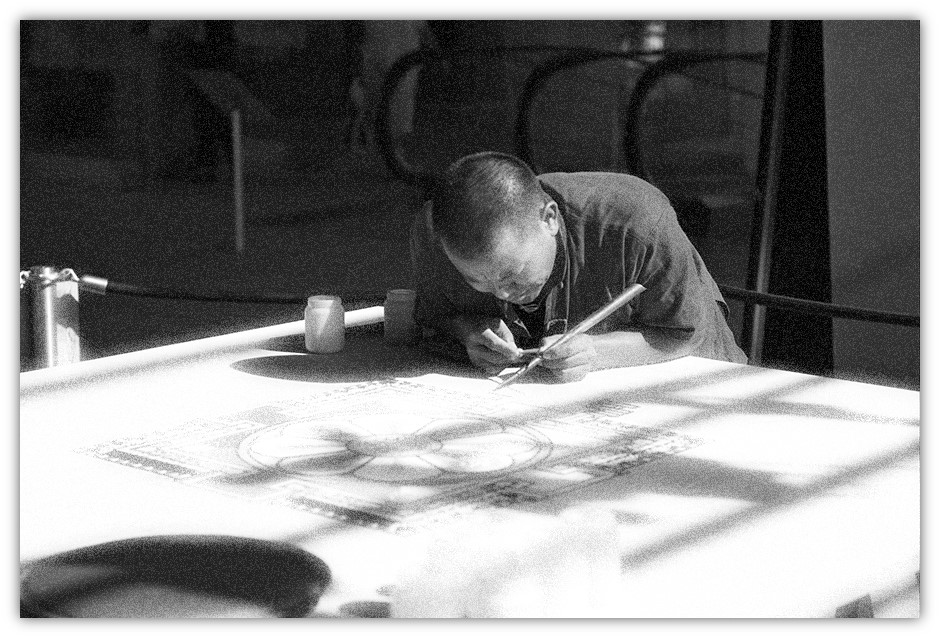
Tibetan Buddhist art plays a central role in the tradition. The sand mandala — painstakingly created by monks over days or weeks, then ritually dissolved — embodies the central Buddhist teaching of impermanence.
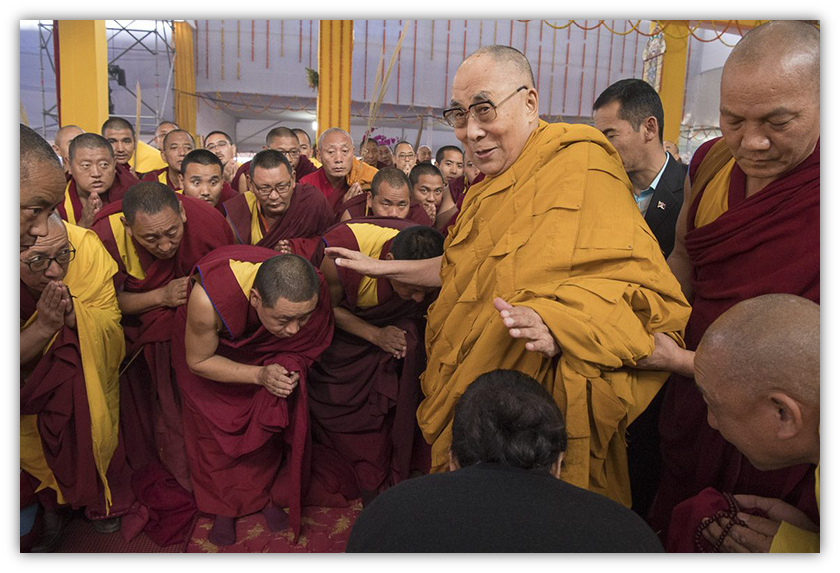
The 14th Dalai Lama
His Holiness Tenzin Gyatso, the 14th Dalai Lama, is understood by Tibetan Buddhists as a living manifestation of Avalokiteshvara, the Bodhisattva of Compassion and patron saint of Tibet. The Dalai Lama is considered a bodhisattva — an enlightened being reborn again and again to serve all sentient beings.
Born in 1935 in northeastern Tibet as Lhamo Dhondup, he was recognized at age two as the reincarnation of the 13th Dalai Lama. Following the Chinese occupation of Tibet in 1959, he fled to Dharamsala, India, where he has led the Tibetan government-in-exile ever since. He is one of the most beloved religious leaders in the world.
Avalokiteshvara takes many forms across Buddhist cultures: Chenrezig in Tibet (male), Guanyin in China (female), and Kannon in Japan (female). The fluid gender of this deity across Buddhist cultures reflects its freedom to assume any form in order to respond to the needs of followers.
Women in Vajrayana Buddhism
Tibetan Buddhist women are leading efforts to expand the role and status of nuns. Jetsunma Tenzin Palmo, one of the most prominent advocates for full ordination of Buddhist nuns, spent twelve years in solitary meditation in a Himalayan cave. She established the Dongyu Gatsal Ling Nunnery in India. The revival of full ordination (bhikshuni) for women in the Tibetan tradition — which was never formally established in Tibet — is an ongoing struggle.
Buddhism in China and Japan
While the exact date of Buddhism’s establishment in China is unknown, it was likely practiced there by the 2nd century CE. Bodhidharma, an Indian monk of the fifth or sixth century, is traditionally credited with bringing Ch’an (Zen) Buddhism to China.
Ch’an/Zen Buddhism
Zen is perhaps the most distinctive of the East Asian Buddhist schools. It emphasizes direct, intuitive experience of one’s own Buddha nature — achieved not through study of texts or elaborate ritual, but through meditation (zazen) and the guidance of a teacher.
As the BBC’s concise introduction to Zen describes: “The essence of Zen Buddhism is achieving enlightenment by seeing one’s original mind (or original nature) directly; without the intervention of the intellect… Zen is big on intuitive understanding, on just ‘getting it’… Zen is simply to be completely alive.”
A central tool in Zen training is the koan — a short question, statement, or story used by the master to provoke insight in the student. The most famous koan is “What is the sound of one hand clapping?” Koans cannot be solved by rational analysis; they are designed to bring the disciple to a breakthrough beyond the logical mind.
Pure Land Buddhism
Pure Land Buddhism is the largest Buddhist tradition in Asia. It was developed in Japan by the monk Honen (1133–1212), who taught that through sincere recitation of the Nembutsu — “Namu Amida Butsu” (“I take refuge in Amida Buddha”) — one could achieve rebirth in Amida Buddha’s Pure Land, a realm of bliss from which enlightenment is easily attained. Pure Land’s accessibility — requiring only sincere faith and recitation — made it particularly popular among people without the leisure for extensive monastic practice.
Nichiren Buddhism and Soka Gakkai
Nichiren Buddhism, developed in 13th-century Japan, centres on the mantra “Namu Myoho Renge Kyo” (“salutation to the Lotus Sutra”). Through disciplined chanting of this phrase, enlightenment can be attained in a single lifetime.
Soka Gakkai International (SGI), founded in 1930 and practising Nichiren Buddhism, has become one of the largest Buddhist organizations in the world, with members in 192 countries. SGI emphasizes kosen-rufu — the widespread propagation of Buddhist teachings — and social engagement through culture, education, and peace activities.
Buddhist Festivals
| Month | Festival | Form | Significance |
|---|---|---|---|
| May (Full Moon) | Vesak (Buddha Day) | Theravada | Birth, Enlightenment, and passing of the Buddha |
| June (Full Moon) | Saka Dawa | Tibetan | Same as Vesak |
| April 8 | Hanamatsuri | Mahayana | Buddha’s birth |
| December 8 | Jodo-e | Mahayana | Buddha’s Enlightenment |
Buddhism in North America
Buddhism in Canada began with the arrival of Chinese workers in the 19th century. Japanese immigrants established a Jodo Shinshu temple in Vancouver in 1905.
One of the darkest chapters in Canadian history occurred during WWII, when Japanese Canadians — most of whom were Buddhist — were forcibly displaced from the west coast and interned in camps in the BC interior. Approximately 22,000 people lost their homes, businesses, and property. The federal government offered a formal apology and reparations only in 1988.
Canadian Buddhist institutions of note:
- Birken Forest Monastery and Tisarana Buddhist Monastery (BC): Theravada monasteries in the Thai forest tradition
- Thrangu Monastery (Richmond, BC): One of the first Tibetan Buddhist monasteries in Canada
- Gampo Abbey (Cape Breton, NS): A Western Buddhist monastery under the direction of Ani Pema Chödrön, a prominent teacher in the Shambhala tradition
Thich Nhat Hanh — the Vietnamese Zen master, poet, and peace activist — has been enormously influential in North America through his teachings on mindfulness and engaged Buddhism. His community, Plum Village in France, is Europe’s largest Buddhist monastery. His key teaching is that through mindfulness, we can learn to live happily in the present moment — the only way to develop genuine peace, both within oneself and in the world.
Fo Guang Shan (“Buddha’s Light Mountain”), a Taiwanese Mahayana organization founded by Hsing Yun, has established the Fo Guang Shan Temple of Toronto in Mississauga as a major Buddhist cultural and religious centre. Its approach — called Humanistic Buddhism — emphasizes making Buddhism accessible and relevant through cultural activities, education, and charitable programs.
Module 6: Confucianism and Daoism — Weeks 10–11
Why Study Confucianism and Daoism?
The People’s Republic of China is the world’s most populous country and one of its oldest civilizations. Confucianism and Daoism are essential to understanding the practices, beliefs, and ethics of Chinese culture — both historically and in the contemporary world.
Both traditions challenge conventional definitions of “religion.” In China, neither Daoism nor Confucianism is typically counted as a religion in official statistics. They fall under the category of jiao — “systems of teachings” — and the concept of “religion” itself was not native to China; it was imported from Japan in the late 1800s. As your textbook notes: “Chinese religious identity and behaviour are also ambiguous and overlapping. People may go to both Daoist and Confucian temples, perform rituals in either tradition, and be familiar with both Daoist and Confucian texts.”
China’s Three Teachings — Confucianism, Daoism, and Buddhism — have coexisted and mutually influenced one another for over two millennia, forming the bedrock of Chinese civilization.
Confucianism
Confucius and the Analects
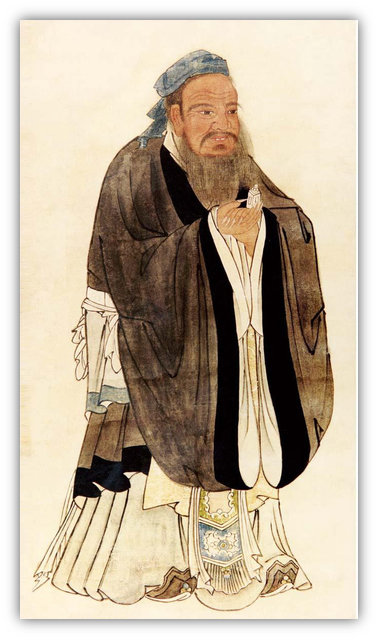
Confucius (Kongzi, “Master Kong,” 551–479 BCE) lived during the turbulent Warring States period — a time of intense political fragmentation and violence in China. His response was not military or political but ethical: he believed that social harmony could be restored by returning to the virtues and rituals of an earlier golden age.
The primary text of Confucianism is the Analects (Lunyu), a collection of the sayings and dialogues of Confucius compiled by his disciples after his death. The Analects reveal a thinker profoundly concerned with everyday human relationships, the cultivation of moral character, and the health of society.
Confucian values include:
- Ceremony and ritual propriety (li)
- Filial piety — respect and love for parents and ancestors
- The Five Constant Virtues: benevolence (ren), ritual integrity (li), righteousness (yi), wisdom (zhi), and integrity (xin)
As the Analects note: “Let the ruler be a ruler; the minister, a minister; the father, a father; the son, a son… Truly, if the ruler is not a ruler, the subject is not a subject, the father is not a father, and the son is not a son, though I have grain, will I get to eat it?”
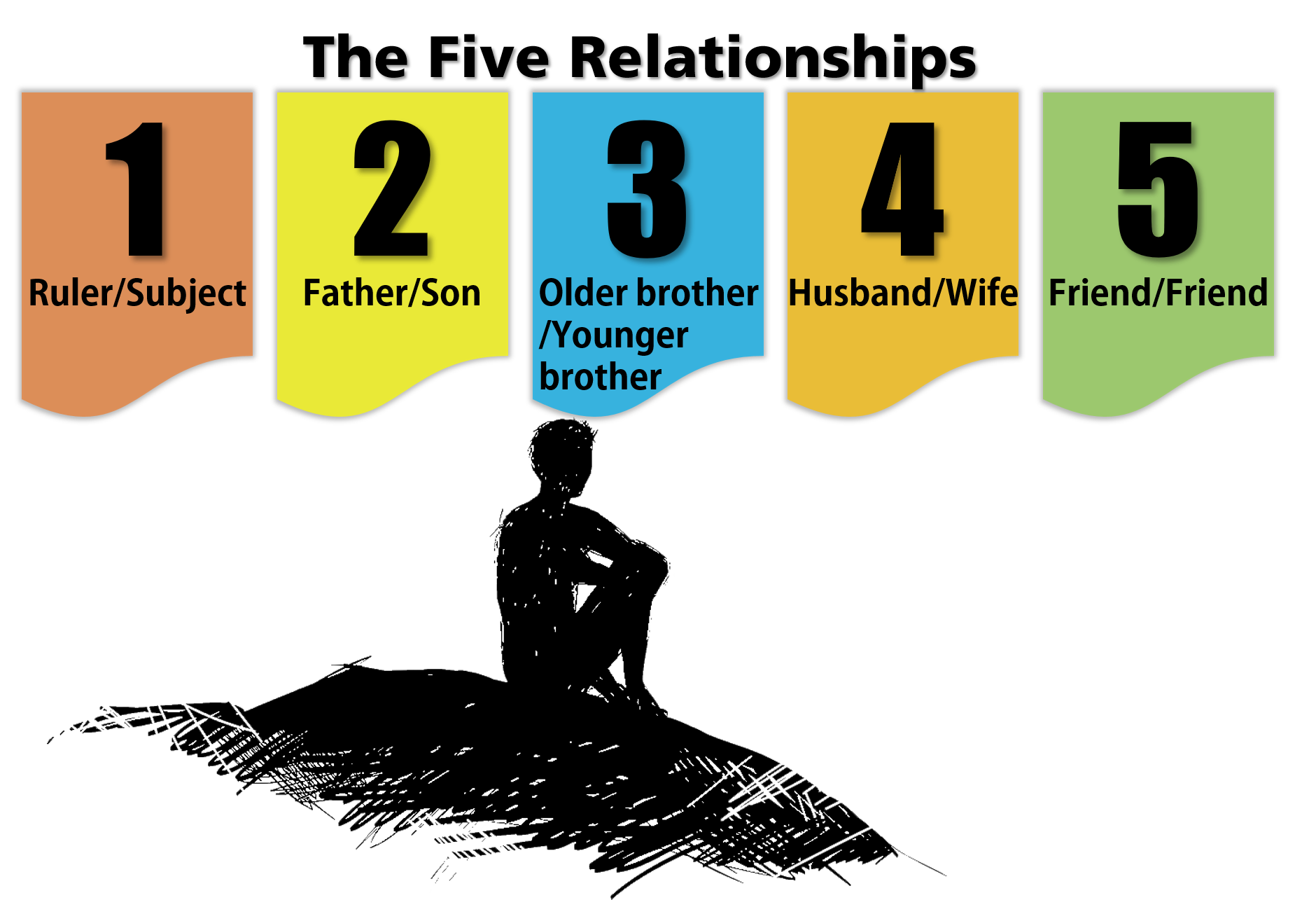
The Five Relationships
The most central aspect of Confucian thought is the notion of five primary human relationships, developed further by the scholar Mencius:
| Relationship | Nature |
|---|---|
| Ruler / Subject | Authority and loyalty |
| Father / Son | Loving authority and filial piety |
| Older Brother / Younger Brother | Seniority and deference |
| Husband / Wife | Differentiated roles and care |
| Friend / Friend | Equality and trust |
For Confucius, each of these relationships involves mutual obligation. The family is the microcosm of society: being the best parent, child, sibling, and spouse lays the groundwork for all other positive relationships. If the five relationships are properly fulfilled, society will naturally achieve harmony.
Jen (Humaneness) and Li (Ritual Propriety)
Two fundamental Confucian virtues are jen (ren, humaneness/humanity) and li (ritual propriety/etiquette).
Jen is the root virtue from which all other virtues flow — a deep feeling of empathy and kindness toward others that must be actively cultivated. Confucius believed all people are inherently good; it is when people fail to cultivate positive virtues that negative characteristics emerge. The famous Confucian “Negative Golden Rule” captures this:
“Do not do to others what you do not want done to yourself.” — Analects 15.23
Li — ritual, ceremony, propriety — is the external form through which jen is expressed and cultivated. As Dr. Jill Carroll notes: “Li is the mechanism by which all of life is ritualized and declared ‘sacred’ in a sense. Through it, life is properly ordered and harmony is established.” For Confucius, the correct performance of ritual — bowing in greeting, wearing appropriate colors on certain days, observing proper manners at a meal — was not empty formalism but the very fabric of moral and social life.
The Mandate of Heaven
T’ian — Heaven — plays an important role in Confucian thought. The Mandate of Heaven (tianming) was understood as the divine right to rule: a particular dynasty was granted the right to govern, but only as long as it did so competently and responsibly. If rulers were oppressive or incompetent, the Mandate of Heaven could be withdrawn, justifying revolution. Emperors, called the “Sons of Heaven,” performed elaborate temple rituals to maintain this mandate.
Ancestor Veneration
Correctly performing funerary rituals is central to Confucian ritual life. Ancestors are not forgotten at death — they continue to be present in family life, requiring respect and attention. Inadequate attention to funerary rites risks the possibility of ancestors’ spirits leaving their graves and wreaking havoc on the living. Ancestor veneration ties the living to both their past and their future — honouring those who came before while modeling proper behaviour for those who will come after.
Gender in Confucian Thought
As your textbook notes, over time, gender hierarchy became increasingly ingrained within Confucian thought. Women were connected to yin and understood as occupying inferior social roles:
The Three Obediences: Women were to obey males at every stage of life:
- Their fathers as daughters
- Their husbands as wives
- Their sons in widowhood
The Four Virtues: Women were guided by correctness (propriety) in behaviour, speech, demeanor, and diligent work.
The practice of footbinding — the breaking and binding of young girls’ feet to create tiny “lotus feet” — began around the 10th century and persisted for roughly a thousand years, affecting an estimated 1 billion women before being abolished in the early 20th century. It is rooted in Confucian gender hierarchies and ideals of female beauty, propriety, and immobility.
Despite these constraints, significant women in Chinese history — such as Wu Zetian (the only woman to rule China as Empress in her own right) — broke through the barriers of Confucian gender ideology.
Daoism
Lao Tzu and the Tao Te Ching
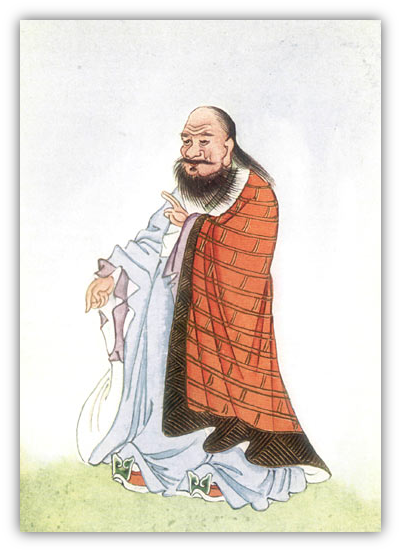
Daoism emerged as a competing philosophy and worldview to Confucianism in the 6th century BCE. Its legendary founder is Lao Tzu (“Old Master”), about whom we know very little historically. According to legend, he left China riding on a water buffalo — the buffalo symbolizing the common farmer and indicating Lao Tzu’s message of simplicity and humility.
The central text of Daoism is the Tao Te Ching (“Classic of the Way and Its Power”), attributed to Lao Tzu and among the most translated books in the world. It consists of 81 short, poetic chapters exploring the nature of the Dao and the path of wise living.
Key Daoist Concepts
1. The Dao (“The Way”)
The Dao is the fundamental principle underlying all reality. Unlike the Confucian use of “Dao” (which refers to the moral path of human conduct), the Daoist Dao is far larger and more mysterious — it is the “Way of Nature,” infinite and beyond all words.
As Professor Jill Carroll captures it: "[The Dao] cannot be reduced to words or concepts — it is infinite, mysterious, and exceeds all words no matter how poetic. So, when we describe or define it, we are merely approximating it — not encapsulating it in its essence or totality… We cannot know it intellectually or analytically; however, we can discern or intuit its presence and workings by developing certain virtues within us and following certain practices."
The Tao Te Ching, Chapter 29, expresses the Dao’s character through nature: “The kingdom is a spirit-like thing, and cannot be got by active doing… The course and nature of things is such that what was in front is now behind; what warmed anon we freezing find. Strength is of weakness oft the spoil…”
2. Yin and Yang
Yin and yang are the two complementary, interdependent forces that underlie all phenomena in the universe:
| Yin | Yang |
|---|---|
| Contracted, Dense | Expansive, Rarefied |
| Dark, Wet, Cool | Light, Dry, Warm |
| Stillness, Passivity | Movement, Activity |
| Receptive, Meek | Expressive, Assertive |
| Female | Male |
Five principles of yin-yang:
- Everything can be described as either yin or yang
- Yin and yang are opposites — yet each contains the seed of its opposite
- They are interdependent — one cannot exist without the other
- They can transform into one another (night becomes day; life changes to death)
- They are always in dynamic balance — as one increases, the other decreases

3. Wu Wei (Effortless Action)
Wu wei — literally “non-doing” or “effortless action” — is the art of living in harmony with the Dao. It does not mean “doing nothing” but rather acting in ways that are natural, spontaneous, and unforced. The willow tree is a central metaphor: its great strength lies precisely in its subtleness and ability to bend with the wind without breaking. Water is another: spontaneously and naturally, water can wear down the hardest stone.
4. Pu (The Uncarved Block)
Pu (“the uncarved block”) represents a state of natural simplicity and wholeness before conscious thought divides and categorizes experience. Benjamin Hoff’s The Tao of Pooh uses Winnie-the-Pooh as an illustration: Pooh just “is” — simple, natural, unforced. When one discards arrogance and complexity, “you will discover that simple, childlike, and mysterious secret known to those of the Uncarved Block: Life is Fun.”
5. Qi (Life Force)
Qi (pronounced “chi”) is the vital life force or energy present in all beings. In Chinese traditions, yin and yang are two fundamental forms of qi. The cultivation and balancing of qi is central to Daoist practice, Chinese medicine, and the meditative movement arts.
Daoist Rituals, Deities, and Festivals
Daoist ritual life is rich and complex, presided over by Daoshi (Daoist priests). Central rituals focus on purification, renewal, and the maintenance of harmony in family, society, and the cosmos. They typically include chanting, instrumental music, and meditative movements.
The Daoist pantheon of deities is vast and hierarchically organized, with specific roles assigned to each. The most prominent include:
- The Three Purities (Sanqing): the highest deities of religious Daoism
- The Jade Emperor (Yù Huáng): the supreme ruler of Heaven
- The Queen Mother of the West (Xiwangmu): goddess of immortality, keeper of the Peach Garden
- The Three Officials (Sān Guān): officials of Heaven, Earth, and Water
Important festivals include the Lunar New Year (the most important Chinese festival worldwide), the Mid-Autumn Festival (Moon Festival), and the Hungry Ghost Festival (Pudu or Ghost Month) — when the spirits of the dead are believed to roam the earth and special offerings are made.
Daoism in North America: Chinese Medicine and Meditative Arts
Many Daoist practices have spread far beyond China and now form a significant part of the North American wellness landscape:
Qi Gong: One of the oldest meditative body practices in China, Qi Gong combines posture, breathing, movement, and meditation to balance and cultivate qi. Its ultimate aim is the harmonization of body and spirit, grounded in the Daoist understanding that there is no strict division between physical form and spiritual reality.
Tai Chi: A form of Qi Gong that has become enormously popular globally, combining gentle flowing movements with meditative awareness. Research by sports psychologists has confirmed its health benefits for balance, stress reduction, and cardiovascular health.
Chinese/Daoist Medicine: Acupuncture, herbal medicine, and other traditional Chinese medical practices are grounded in the Daoist understanding of qi, yin-yang balance, and the interconnection of body, mind, and spirit. In acupuncture, tiny needles are placed on specific points along the body’s meridians — pathways through which qi flows — to restore balance and relieve illness.
Chinese Immigration to Canada
The history of Chinese Canadians is marked by remarkable resilience in the face of systematic discrimination:
Timeline:
- 1788: First known Chinese immigrants arrived in Canada for trade purposes
- 1858: Greater numbers arrived on the West Coast in search of gold
- 1880s: Massive influx of Chinese labour for the Canadian Pacific Railway (CPR) — paid less than their European counterparts and assigned the most dangerous work, including blasting through mountain terrain. Many were injured or killed.
- 1885: The Chinese Head Tax was imposed — $50 per immigrant, rising to $500 by 1903 (roughly two years’ wages)
- 1907: The Asiatic Exclusion League formed; anti-Asian riots swept Vancouver, destroying Chinese businesses
- 1923: The Chinese Exclusion Act effectively banned all Chinese immigration to Canada
- 1942–1945: Though not specifically targeted as were Japanese Canadians, Chinese Canadians faced ongoing discrimination during WWII
- 1947: The Chinese Exclusion Act was finally repealed
- 1967: The discriminatory points system was replaced with a race-neutral immigration policy
The Canadian government collected roughly $23 million from the racist head tax — an amount that has never been returned. The story of Chinese Canadian railroad workers, their labour, suffering, and exclusion, is a foundational chapter in Canadian history.
Module 7: Shinto — Week 12
Why Study the Shinto Tradition?
Shinto is uniquely intertwined with one particular country and ethnicity — Japan and the Japanese — to an extent that is unusual among the world’s religious traditions. Perhaps most often described as “the Japanese way of life,” Shinto offers a fascinating glimpse into the making of both a nationality and a nation.
Unlike the traditions studied earlier in this course, Shinto has almost no institutional presence outside of Japan. It has no sacred scripture, no founder, no formalized ethics, no organized creed or theology. What it does have is a rich, traditional, and diverse set of ritual practices that highlight the relationship between countless Shinto deities called kami, the Japanese people, and Japan itself. Understanding Shinto rounds out one’s picture of Asian religious traditions and reveals the existence of a fascinating type of nature-based, ritual-centred religion.
Key Terms and Beliefs
Kami
Kami — meaning “the spirits” or “the divine” — is the central concept of Shinto. As your textbook notes, even the erudite scholar Norinaga Motoori (1730–1801) wrote: “I do not yet understand the meaning of the term kami.” The term is complex: kami can denote deities, but also birds, beasts, trees, plants, mountains, waters — anything that is awe-inspiring and extraordinary, both benevolent and dangerous, generally associated with nature. The power of kami is present in waterfalls, ancient trees, mountains, and animals.
Humans themselves have a kami nature — all Japanese are understood to have a direct connection to the kami, and life is understood as an opportunity to embody and express that kami nature more fully.
Creation Myths: Izanami and Izanagi
The creation myths of Shinto come from two Japanese classics: the Kojiki (“Record of Ancient Matters,” 712 CE) and the Nihon Shoki (“Chronicles of Japan,” 720 CE). These texts record that the primordial couple of Japan, Izanagi and Izanami, descended from Heaven on a jewelled bridge and used a divine spear to stir the ocean, creating the Japanese islands.
Izanagi and Izanami went on to create the many kami of the natural world — wind, sea, mountains — until Izanami died giving birth to the kami of fire. Izanagi descended into the underworld (Yomi) to retrieve her, but was horrified by what she had become, and fled. His purification after this encounter — washing in a river — is the origin of misogi, the central Shinto purification ritual.
Amaterasu, the Sun Goddess
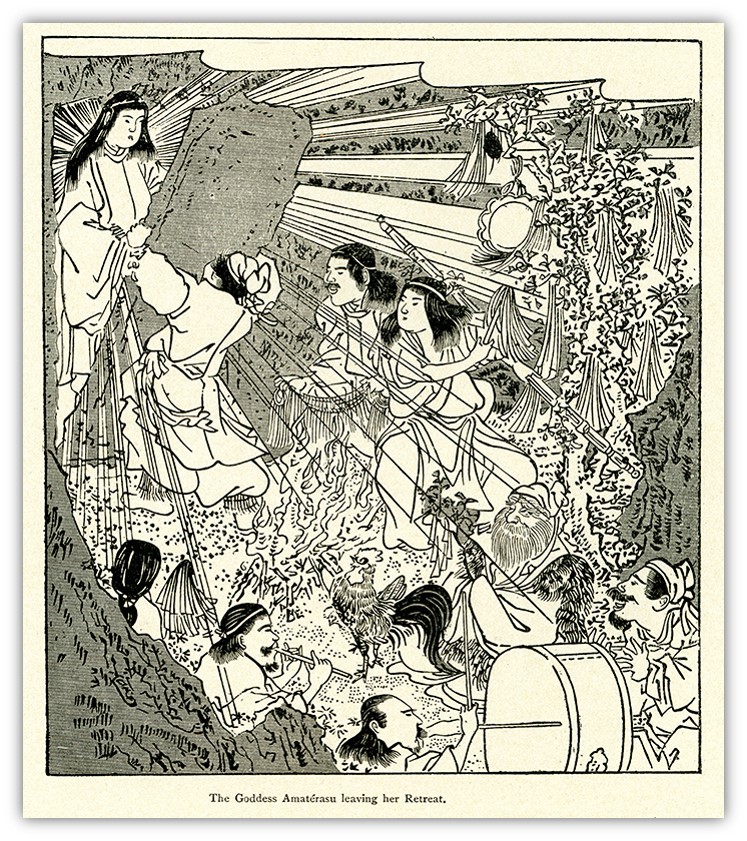
From the Kojiki and Nihon Shoki, we learn that Amaterasu — “she who illuminates heaven” — is the most important kami in the Shinto pantheon. She is the sun goddess, ruler of the High Heavenly Plain, and the divine ancestor of the Japanese imperial family. The story of Amaterasu’s temporary withdrawal into a cave (out of anger at her brother Susanoo’s behavior) and her emergence after being lured out by the laughter of the other kami explains why the world periodically falls dark and then becomes light again.
The sacred round mirror (yata no kagami) — said to be housed at the great shrine of Ise — is associated with Amaterasu and is one of the three imperial regalia of Japan.
Shinto Beliefs: Purity and Purification
Central to Shinto is the concept of purity. Humans are born pure, with a kami nature, but accumulate tsumi (defilement, pollution, sin) through contact with death, disease, blood, and negative energies. This pollution is understood both physically and spiritually — it is not only bodily impurity but the spiritual obstructions that prevent us from fully expressing our kami nature.
As Dr. Beverlee Jill Carroll notes: “This purity of heart is a natural companion to makoto [sincerity]. Purity rituals use water as the cleansing agent, and the rituals include rinsing the mouth, washing the hands, bathing, standing under waterfalls, and other such things. Often, these activities are done at a shrine, and they symbolize the inner purity necessary for a truly human and spiritual life.”
Harae (purification) rituals are therefore central to Shinto practice. The most important water purification ritual is misogi — whole-body purification, traditionally performed by standing under a cold waterfall. The temizu or chōzuya (water basin) at the entrance to every Shinto shrine provides for a simplified version: visitors rinse both hands and their mouth before approaching the shrine.
Shinto Shrines
The torii gate — a distinctive vermillion gateway — marks the boundary between the sacred (the shrine precincts) and the ordinary world. At every Shinto shrine, the torii signals the transition from the profane to the sacred. There are thousands of torii gates throughout Japan; the most famous are those of the Fushimi Inari Shrine in Kyoto, where thousands of gates form long tunnels through the wooded hillside.

The Ise Grand Shrine is the most sacred site in Shinto, housing Amaterasu’s sacred mirror. One of its most remarkable features is the Shikinen Sengu ceremony: every twenty years, the main shrine buildings are completely destroyed and rebuilt on an adjacent site. This practice has continued without interruption since the 7th century (most recently in 2013) and embodies the Shinto principle that renewal and regeneration, not permanence, are the nature of the sacred.
The Shinto priesthood (shinshoku) does not require celibacy. Women may become priests, often succeeding their husbands in widowhood. The training for the Shinto priesthood requires a high level of formal education in Japan.
Shinto Practices and Festivals
Matsuri (festivals) are central to Shinto life, celebrated throughout the year at local shrines. They typically involve processions, music, dance, and offerings to the kami. The calendar of major Shinto festivals revolves around the agricultural seasons and the ritual needs of the imperial household.
Weddings: The Shinto wedding ceremony (san-san-kudo — the sharing of three sake cups three times) is the most common form of wedding in Japan, typically celebrated in a shrine with a Shinto priest officiating.
Miko: Shinto shrine maidens who assist priests in rituals, perform sacred dance, and sell ritual objects. Miko are familiar figures in Japanese popular culture and frequently appear in anime.
Shinto and Anime
Shinto concepts — kami, purification, sacred spaces, the torii gate — permeate Japanese anime and popular culture. Films by Studio Ghibli, especially those of Hayao Miyazaki (My Neighbor Totoro, Princess Mononoke, Spirited Away), are deeply infused with Shinto sensibility: the belief that the natural world is alive with spirits, that purity matters, and that the boundary between the human and the divine is always permeable.
Wabi-Sabi
One distinctively Japanese aesthetic concept — deeply connected to both Shinto and Zen Buddhism — is wabi-sabi: an appreciation of the beauty of imperfection, impermanence, and incompleteness. Where Western aesthetics tends to value perfection, symmetry, and permanence, wabi-sabi finds beauty in the worn, the crooked, the incomplete, and the transient. The Shinto acceptance of natural processes (including decay and death) and the Zen embrace of impermanence converge in this uniquely Japanese worldview.
Shinto Outside of Japan
Shinto is intricately bound to Japan and the Japanese people — it has almost no comparable institutional presence elsewhere. Nevertheless, it is slowly taking root in North America:
The Tsubaki Grand Shrine of America in Granite Falls, Washington, is one of the few Shinto shrines in North America. The shrine sponsors Shinto ceremonies, festivals, and teachings, and offers purification rituals including misogi (standing under a waterfall).
The Konko Church of Vancouver represents another form of Shinto presence in Canada. Note that the term “church” — rather than “shrine” or “temple” — is used, reflecting the adaptation of Japanese religious spaces to North American cultural and linguistic norms.
Japanese Canadians and Discrimination
It is impossible to discuss Japanese religion in Canada without acknowledging one of the most painful episodes of racism in Canadian history: the internment of Japanese Canadians during WWII.
Following Japan’s attack on Pearl Harbour in December 1941, the Canadian government declared all people of Japanese ancestry — including Canadian citizens, many of whom had been born in Canada — to be “enemy aliens.” By 1942, approximately 22,000 Japanese Canadians were forcibly displaced from the BC coast and imprisoned in internment camps in the BC interior and elsewhere in Canada. Their property was confiscated and sold. Many Japanese Canadian men were sent to road camps or sugar beet farms. Some had even served in the Canadian military in WWI.
The internment lasted until 1949. In September 1988, Prime Minister Brian Mulroney delivered a formal apology to Japanese Canadians for the wartime internment and announced a compensation package of $12,000 for each survivor.
Beyond internment, Japanese Canadians have contributed enormously to Canadian life — through Japanese gardens (such as the Nitobe Memorial Garden in Vancouver), Buddhist and Shinto practices, martial arts, cuisine, and cultural exchange.
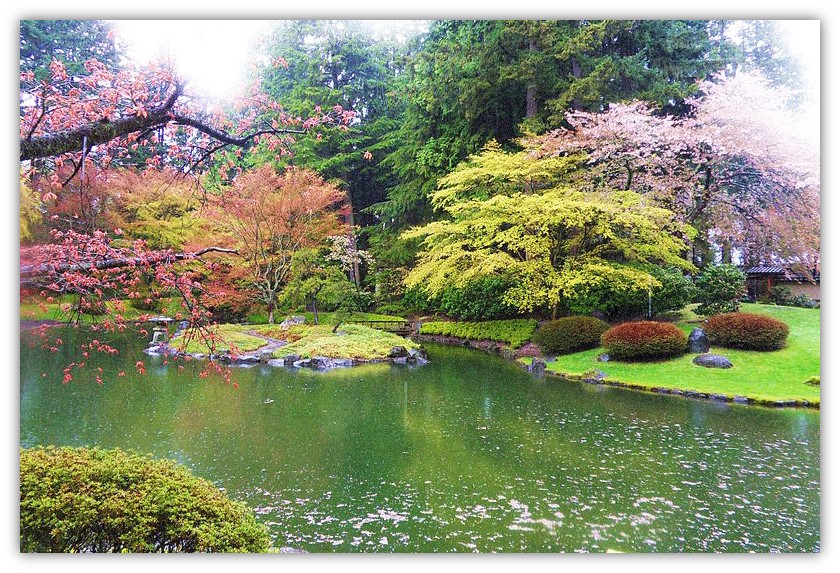
Course Conclusion: Eastern Traditions and Canada
Throughout this course, you have encountered seven major religious traditions of Asia — Hinduism, Jainism, Sikhism, Buddhism, Confucianism, Daoism, and Shinto — studied both in their places of origin and in their Canadian diaspora contexts. A recurring theme has been the experience of discrimination faced by Asian Canadians: the Komagata Maru incident, the Chinese Head Tax, the internment of Japanese Canadians. These histories remind us that understanding religion is inseparable from understanding history, politics, and the exercise of power.
At the same time, each tradition carries profound resources of wisdom, compassion, and beauty. The Hindu concept of Brahman as the ground of all being; the Jain commitment to ahimsa as a guide to every aspect of life; the Sikh langar feeding thousands every day regardless of caste or creed; the Buddhist Eightfold Path as a map of ethical and contemplative practice; Confucian jen as the cultivation of our deepest humanity; Daoist wu wei as the art of living in harmony with nature; and Shinto’s sense that the sacred is present in waterfalls, ancient trees, and the morning light — all these offer profound contributions to a world in need of greater compassion, wisdom, and beauty.
The key to the academic study of religion, as this course has insisted throughout, is neither belief nor scepticism, but literacy: the capacity to understand, respect, and engage intelligently with the religious traditions that shape the lives of billions of human beings and the histories of the world’s civilizations.
Course materials adapted from RS 100: World Religions — Eastern Traditions, University of Waterloo, Spring 2021. Textbook: Jakobsh, Doris (ed.). World Religions — Canadian Perspectives: Eastern Traditions. Nelson Education Press, 2013.