HRM 200: Basic Human Resources Management
Katrina Di Gravio
Estimated study time: 48 minutes
Table of contents
Module 1: Strategic Importance of HRM and the Changing Legal Emphasis
Part 1: Strategic Importance of Human Resources Management
New Competencies in HR
Human Resources Management is fundamentally about the management of people in organizations. The HR professional ensures the organization has the best workers — its human capital — in place. This involves formulating and implementing HR practices and systems that are aligned with organizational strategy. In today’s HRM environment, three broad areas of knowledge define a modern HR professional’s mandate: relationships, systems and processes, and organizational capabilities.
At the heart of the profession, the textbook identifies six core roles that every HR professional must embody:
- Credible Activist: You need people to respect and trust you, and you must also be active — willing to challenge ideas, take a stand, and advocate for what is right.
- Operational Executor: Strategy without execution is meaningless. An HR professional must be able to translate ideas into action.
- Business Ally: Goal-setting depends on understanding the environment in which the business operates. Being able to perform a SWOT analysis and understand where the business sits competitively is an essential skill.
- Culture and Change Steward: The HR professional helps shape and promote the organization’s corporate culture through programs, strategies, and projects.
- Talent Manager/Organizational Designer: How is your organization attracting, holding, and replacing talent? How does it manage turnover and absenteeism?
- Strategy Architect: HR is increasingly involved in both formulating and implementing organizational strategy. Leaders today recognize that having HR at the strategic table is a significant competitive advantage.

Measuring the Value of HR: Metrics
A key difference between the traditional and modern HR role is the requirement to measure the value and impact of the organization’s human capital and HRM practices. Metrics are statistics — covering both quantity and quality — that HR professionals must understand and use. Simply measuring activity is not enough; the measurement must connect to meaningful outcomes.
An important tool is the balanced scorecard, in which HR measures form part of a broader system that translates organizational strategy into a comprehensive set of performance measures at multiple levels, including financial and operational.

Environmental Scanning
Modern HR professionals must engage in environmental scanning — looking outward at the wider world in addition to maintaining an internal focus. HR professionals need to understand both external and internal environmental influences that could affect strategy formulation and implementation.
External environmental factors influencing HRM include:
- Economics and labour market conditions
- Technology
- Government policy and legislation
- Globalization
- Environmental issues
Internal environmental factors include:
- Organizational culture: The core values, beliefs, and assumptions often conveyed through a mission statement to create the desired positive culture.
- Organizational climate: The prevailing atmosphere in an organization — whether friendly or unfriendly, open or secretive, rigid or flexible, innovative or stagnant. Leadership shapes this alongside HR policies and communication practices.
- Management practice: In today’s world, bureaucratic organizations are being replaced by flatter structures with greater employee empowerment.
Growing Professionalism in HRM
The textbook discusses HRM and the professionalism and certification requirements for the Certified Human Resources Professional (CHRP) designation. Bill 32 (Registered Human Resources Professionals Association Act, or HRPA) was passed in November 2013, reflecting the realities of today’s workplace. The HRPA is the regulatory body that sets standards of practice and issues designations, which now include the Certified Human Resources Leader (CHRL) and Certified Human Resources Executive (CHRE).
Every profession shares several common characteristics: a common body of knowledge, performance standards, a professional association, external recognition as a profession, a code of ethics, required training credentials, ongoing skill development, and socially responsible use of professional competence. In Canada, HR practitioners are increasingly becoming more professional through their provincial associations, which are affiliated with the Canadian Council of Human Resources Associations and, through it, the World Federation of People Management Associations.
Part 2: The Changing Legal Emphasis
The Legal Framework for Employment Law in Canada
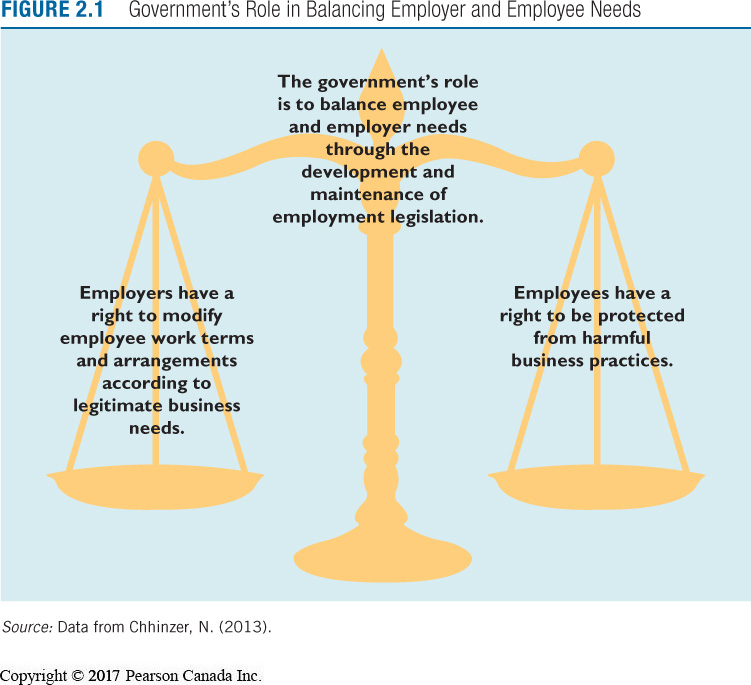
Both HR professionals and front-line managers need up-to-date knowledge of the multiple layers of employment legislation that affect Canadian workplaces in order to reduce legal liability and protect against expensive lawsuits.
Three significant differences between the Canadian employment system and the US approach are worth noting:
- Canadians have a higher acceptance of government-mandated regulations for organizations.
- “Employment at will” — where either party can break the employment relationship without notice — does not exist in Canada. Employers must provide reasonable notice when terminating employees without cause.
- In contrast to the largely centralized model in the USA, the primary responsibility for employment law in Canada resides with the provinces and territories. Provincial legislation governs approximately 90% of Canadian workers.
Canadian employment legislation encompasses: the Canadian Charter of Rights and Freedoms, Human Rights Legislation, Employment Standards Legislation, ordinary laws, collective bargaining agreements, and individual employment contracts. This means HR professionals must be aware of differences in the law from province to province.
The three most common types of complaints heard by human rights commissions relate to discrimination based on: disability (approximately 50%), gender including pregnancy and harassment (approximately 20%), and race (approximately 10%).
Legislation Protecting the General Population
Discrimination is defined as “a distinction, exclusion or preference based on one of the prohibited grounds that has the effect of nullifying or impairing the right of a person to full and equal recognition and exercise of his or her human rights and freedoms” (Canadian Charter of Rights and Freedoms).
Intentional discrimination takes several forms:
- Direct: refusing to hire someone outright
- Differential or unequal treatment: treating someone differently due to, for example, a disability
- Indirect (third-party): using an outside agency to discriminate
- Association: discriminating because someone belongs to a group (e.g., membership in Planned Parenthood)
Unintentional discrimination includes:
- Constructive or systemic discrimination: where a situation appears neutral but has adverse impact on specific groups. Often policies are simply outdated — for example, limited building access that prohibits individuals who use wheelchairs.
- Policies with adverse impact on specific groups: not intended as discriminatory but producing that effect — for example, historic airline policies requiring flight attendants to meet attractiveness-based height and weight requirements.
Figure 2.4 in the textbook lists examples of systemic discrimination: minimum height and weight requirements that screen out disproportionate numbers of women and people of Asian heritage; internal hiring or word-of-mouth hiring in non-diverse workplaces; limited accessibility to company premises; and culturally biased or non-job-related employment tests.
Harassment
Harassment is defined as “unwelcome behaviour that demeans, humiliates or embarrasses a person and that a reasonable person should have known would be unwelcome.” The employer bears responsibility to protect employees from harassment, including harassment by clients or customers.
Sexual harassment is “offensive or humiliating behaviour that is related to a person’s sex, as well as behaviour of a sexual nature that creates an intimidating, unwelcome, hostile, or offensive work environment, or that could reasonably be thought to put sexual conditions on a person’s job or employment opportunities.”
Harassment can take two main forms: coercion — direct consequences to tangible job benefits such as money, promotion, or status — and annoyance — intimidating or offensive conduct without direct link to tangible job benefits, such as persistent unwanted messages. Employers are obligated to demonstrate awareness of discrimination and harassment issues proactively, take prompt action after complaints, and demonstrate reasonable resolution and communication.
The Employment Equity Act
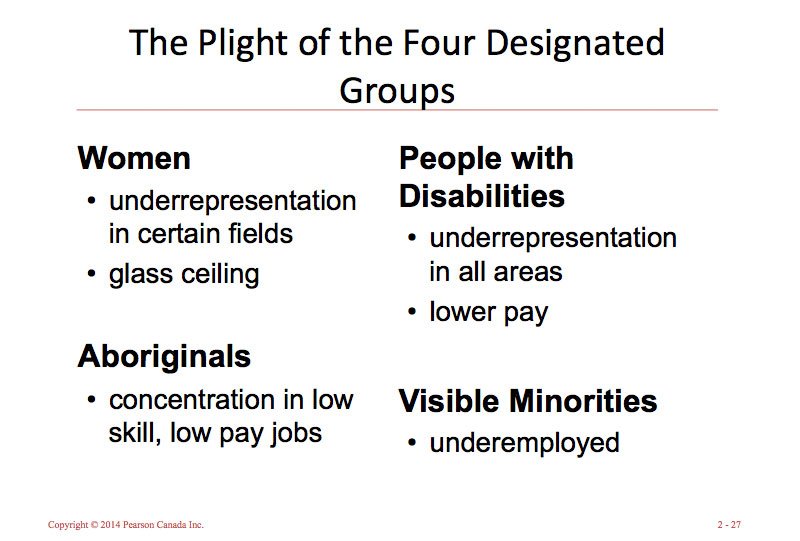
The Employment Equity Act (EEA) is a program that goes beyond basic human rights to help four designated groups: women, visible minorities, persons with disabilities, and Aboriginal peoples. It is based on the Charter of Rights and Freedoms, applies only to federally regulated employers, and promotes equality by removing employment barriers.
Employment Equity Plans are mandatory only for federally regulated employers. For a successful plan, organizations need: commitment and buy-in from senior management; voluntary data collection through stock data (a snapshot of the organization’s current workforce composition) and flow data (the changing dynamic as employees self-identify); review of procedures for systemic problems; and continuous monitoring of progress.
Employment and Labour Standards Legislation
Employment standards legislation covers all employers and most employees in Canada, both unionized and non-unionized. The Employment Standards Act sets minimum terms and conditions which can be exceeded but cannot be waived by either employers or employees. Where an employment contract or collective bargaining agreement exceeds the ESA, the principle of greater benefit applies — employers cannot revert to the ESA minimum.
Complaints of ESA violations must be submitted to the Ministry of Labour within preset time limits; fines and restitution are awarded up to maximum limits. Employees cannot sue in civil court if they have filed a Ministry claim.
Respecting employee privacy is also a growing area of law. The Personal Information Protection and Electronic Documents Act (PIPEDA) governs the collection, use, and disclosure of personal information — employees must consent to collection, use, and dissemination of their personal information. With respect to video surveillance, companies must demonstrate that reasonable alternatives were not available.

Ethical Dilemma: The President’s Request
You have been working as a talent specialist at Megacorp Manufacturing for three years. After meeting with the company president to discuss hiring a new office staff member, he says: “One more thing. I don’t want you to hire a gay or lesbian for this position because it would make me uncomfortable.” What do you do?
This scenario highlights a fundamental conflict between an employer’s preferences and Canadian Human Rights legislation, which explicitly prohibits discrimination on the basis of sexual orientation. The correct action is to respectfully but firmly explain that such a selection criterion is illegal, and to document the exchange in case of future legal action. The HR professional’s obligation is to the law, the organization’s legal interests, and to the dignity of all candidates.
Module 2: HRM and Technology and Designing and Analyzing Jobs
Part 1: HRM and Technology
Trends in the Nature of Work
Technology has fundamentally changed how people work and, therefore, the skills that workers need. The shift toward automation and information and communication technology (ICT) has driven an increased demand for knowledge work and raised the general educational requirements for most jobs. Research shows that companies who use technology effectively to manage their HR functions will have a significant competitive advantage over those that do not.
Strategic HR technology serves three key objectives: strategic alignment with business objectives; business intelligence, which provides users with relevant decision-making data; and effectiveness and efficiency, which changes how HR work is performed by reducing lead times, costs, and administrative burden.
Electronic HR (e-HR) integrates an organization’s strategies, processes, and human capital to improve overall HR service delivery via the web and self-service applications. The Human Resources Information System (HRIS) enables organizations to manage employee data more efficiently, freeing HR professionals to focus on more meaningful, value-adding activities.

The Impact of Technology on the Role of HRM
Technology has produced seven core competencies that modern HR professionals must develop:
- Mastery of HR technology
- Strategic contribution
- Business knowledge
- Personal credibility
- Data management
- Financial management
- HR service delivery
The rise of Bring Your Own Device (BYOD) policies — allowing employees to use personal electronic devices for work — introduces both benefits (increased engagement, flexibility) and risks (data security threats, privacy concerns). HR professionals must develop clear policies governing BYOD use.

Ethical Dilemma: The Senior Manager’s Bonus
Bob, a senior manager at your company, is a close family friend. He asks if you can tell him what his upcoming bonus will be, since he has serious financial problems and may need to take out a loan today. What do you do?
Disclosing confidential compensation information — even to friends or people with social leverage — violates the HR professional’s duty of confidentiality. The fact that Bob mentions his cottage (an implicit social pressure) makes this an example of how personal relationships can compromise professional ethics. The correct response is to decline, offer resources such as employee financial assistance programs, and document the conversation.
Part 2: Designing and Analyzing Jobs
Job Analysis
Job analysis is the foundation of good human resource management. Everything starts with job analysis, and its impact can be felt throughout the organization, from HR planning through to labour relations.
Two important distinctions:
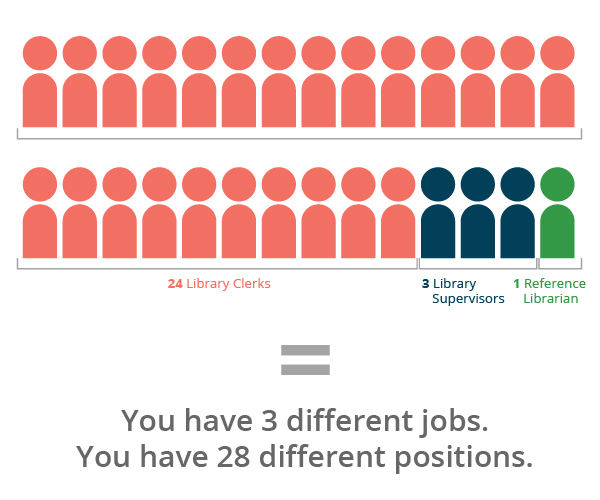
- A job is a group of related activities and duties that may be performed by one or more employees.
- A position is the collection of tasks and responsibilities performed by one specific person.
For example, a library might have 24 clerks, 3 supervisors, and 1 reference librarian — that is 3 different jobs but 28 different positions.
Competency-Based Job Analysis
In high-performance work environments, employers increasingly need workers who can move fluidly between roles and exercise self-direction rather than requiring close supervision. Competency-based job analysis describes a job in terms of the measurable, observable, behavioural competencies — knowledge, skills, or behaviours — that an employee must exhibit to do the job well.
Three reasons to use competency-based analysis:
- Traditional job descriptions breed an “it’s not my job” mentality rather than fostering learning and self-motivation.
- Competencies provide a tighter linkage to organizational strategy.
- Performance management processes become more transparent, clearly identifying the basis for training, appraisals, and rewards.
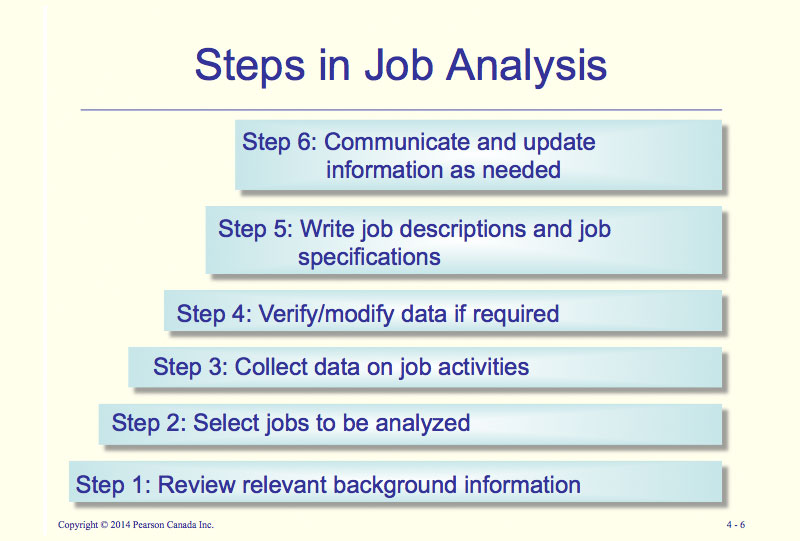
The six steps of job analysis are: (1) review relevant background information; (2) select jobs to be analyzed; (3) collect data on job activities; (4) verify or modify data if required; (5) write job descriptions and job specifications; and (6) communicate and update information as needed.
Data collection in Step 3 can take several forms, including interviews with job incumbents, direct observation, employee diaries or logs, and questionnaires. Each method has advantages and disadvantages depending on the nature of the work.
Module 3: Human Resources Planning and Recruitment
Part 1: Human Resources Planning
What is Human Resources Planning?
Human Resources Planning (HRP) is a proactive process of reviewing human resources requirements to ensure the organization has the required number and type of employees to meet its goals and objectives. It means having the right people, with the right skills, in the right place, at the right time.
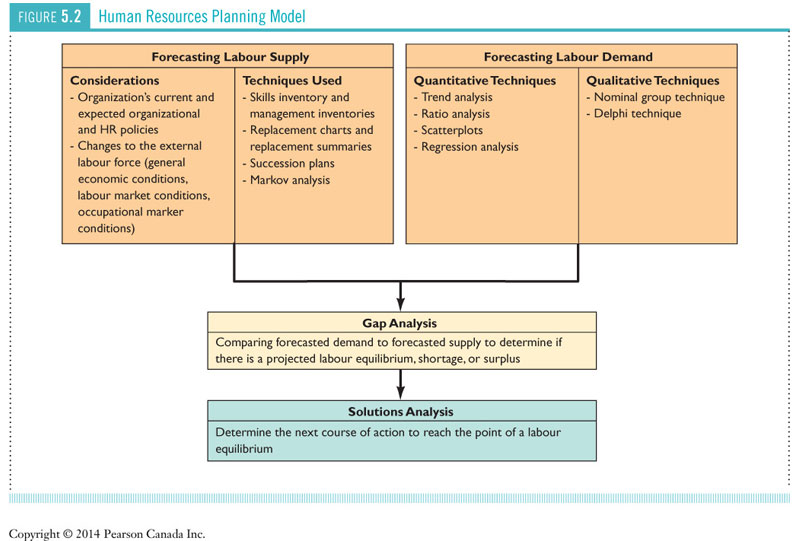
HRP both anticipates and influences an organization’s future by systematically forecasting the demand for and supply of employees under changing conditions, and developing plans to satisfy those needs. The four key steps in the HRP process are:
- Forecasting labour supply
- Forecasting labour demand
- Gap analysis
- Solutions analysis
Lack of adequate HRP can result in significant costs, labour mismatches across departments, reduced morale, increased turnover, and failure to accomplish strategic plans.
Environmental Scanning for HRP
Before forecasting, HR planners must scan the external environment. For example, when considering global expansion, planners must examine economic conditions, labour market availability, ease of doing business, and quality-of-life factors in potential locations — all of which directly affect an organization’s ability to attract and retain qualified workers in a new country.

Methods for Forecasting Internally
Before looking externally, management must determine how many candidates for projected openings will likely come from within the organization. Confidentiality is essential when using replacement charts, replacement summaries, or succession plans. Four main approaches are used:
- Replacement charts — visual representations of who will replace key employees
- Replacement summaries — more detailed information about potential replacements
- Succession planning — identifying and preparing high-potential employees for key future roles
- Markov Analysis — a quantitative tool that shows the number of employees in each category who remain in each job from year to year, expressed as a percentage. For example, if 27 of 31 assistant managers remain in their current role and 3 are promotable to warehouse manager while 1 turns over, the analysis shows both supply continuity and succession pressure.
Watch the Markov Analysis animation in your course materials for a worked example of this technique.
Methods for Forecasting Externally
When sufficient internal candidates are not available, firms must look externally. HR planners assess:
- General economic conditions — including interest rates, wage rates, inflation, and unemployment
- Labour market conditions — demographic characteristics such as education levels, age, and gender distribution
- Occupational market conditions — availability of candidates in specific occupations, some of which face significant shortages while others face surpluses
Forecasting future HR needs (demand) begins with sales forecasts, which are translated into production volume forecasts, which in turn determine staffing levels. Additional factors include projected turnover, the quality and nature of needed employees, planned technological changes, and the organization’s financial resources.
Part 2: Recruitment
Employer Branding
Getting people excited about the possibility of working for your organization is a strategic imperative. As a recruiter, you need to answer four questions: Who do we want? Where do we find our best candidates? Why do those potential candidates want to work for us? How do we communicate that we are a great place to work?
Table 6.1 Employer Branding Steps:
| Step | Example |
|---|---|
| 1. Define the target audience | Target one of the four generations, the underemployed, or the four employment equity groups |
| 2. Develop the employee value proposition | Loblaw and Fairmont Hotels offer participation in “green” environmental initiatives; PCL Construction offers 80% employee share ownership |
| 3. Reinforce value proposition in communication | Use an integrated marketing approach across television, radio, print, websites, and social media |
A well-branded employer attracts the right talent at lower cost and reduces turnover by setting accurate expectations.
The Recruitment Process
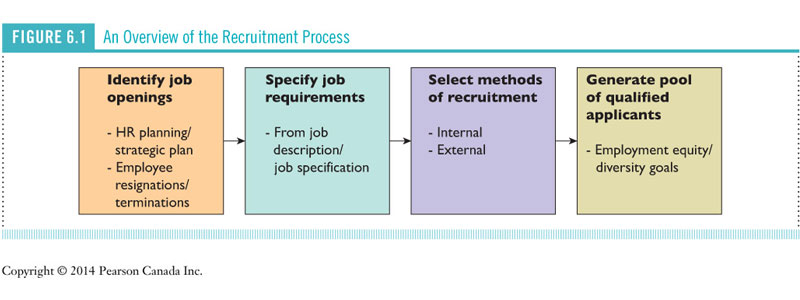
The four steps in the recruitment process are: (1) identify vacancy and evaluate need; (2) describe the job; (3) identify target population; and (4) select and implement recruitment method.
Constraints for recruiters include:
- Promotion from within policies — most organizations require internal posting before external recruitment
- Compensation policies — recruiters cannot exceed established wage and benefits policies
- Employment equity — organizations with EEA plans may need further outreach to designated groups
- Competition for talent — recruiters must know what inducements can be matched without making unkeepable promises (which can lead to claims of Negligent Representation)
- Labour shortages — require changing traditional recruitment practices, including attracting foreign recruits
Internal and External Recruitment Methods
Internal methods:
- Job posting — advertising positions so all employees know about vacancies
- HR records — consulting records to notify qualified individuals personally
- Skills inventories — the most effective approach; can be managed through the HRIS or manually
External recruitment planning involves three key considerations:
- Type of job: Engineers, business managers, retail workers, and hospitality staff each have preferred recruitment methods (referrals, print ads, professional associations, etc.).
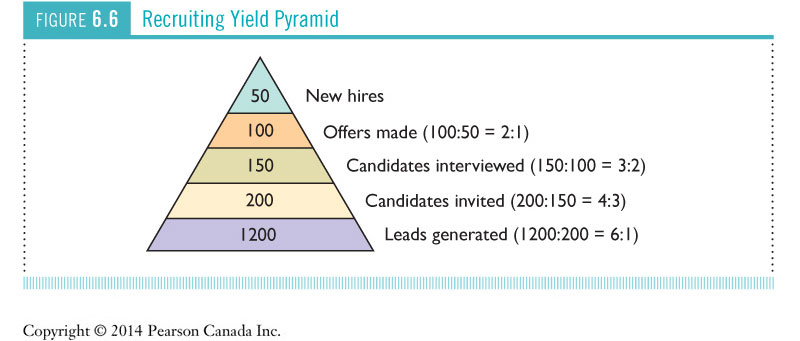
- Yield ratios: Comparing recruitment methods to determine which generates the greatest source of qualified candidates per dollar spent.
- Time lapse data: Tracking the time from recruitment initiation to the new hire’s first day of work.
Many organizations also work with the Department of Employment and Social Development Canada (ESDC), formerly Human Resources and Skills Development Canada, as a recruitment resource.
Recruiting a More Diverse Workforce
Older workers tend to have high job satisfaction, a strong work ethic, excellent people skills, and a willingness to work in a variety of roles. They bring loyalty, commitment, and irreplaceable knowledge. Organizations like Home Depot have developed formal strategies for attracting older workers.
Younger workers bring energy, enthusiasm, and physical strength. Recruiters should promote the variety of experiences available and emphasize social responsibility, diversity, and creativity. McDonald’s Canada is an example of an organization with targeted strategies for young worker recruitment.
Designated groups require recruiters to develop linkages with relevant organizations and agencies, advertise in alternative publications, and participate in government programs. Organizations committed to diversity are typically the first to have these connections in place.

Module 4: Selection
Strategic Importance of Employee Selection
Selecting the “best” candidate for the job may seem simple, but in today’s competitive labour market, a poor selection process results in costs in time and money, as well as potential legal liability ranging from human rights complaints to negligent hiring and wrongful dismissal. A strong selection process — one that is both reliable (consistent results) and valid (measures what it intends to measure) — is key to organizational success.
Job design, job analysis, job descriptions, and job specifications all lay the groundwork for an effective selection process: they define what “best” actually means for each role.

Acquiring Employees and the Law
Managing the selection process in a legally defensible way requires:
- Do not ask questions that would violate human rights legislation, either directly or indirectly
- Ensure all selection criteria are based on the job description and specifications
- Obtain written authorization from prospective employees before checking references
- Save all records and information obtained during each stage of the selection process
- Reject applicants who make false statements on application forms or résumés
Interview questions about family plans, marital status, or other prohibited grounds are not only inappropriate — they are illegal. Interviewers must be trained to understand what questions are permissible.
Selection Testing
A few critical notes about selection tests: they must be reliable (consistent over time and across administrations) and valid (they must actually measure the quality they are intended to assess). Additionally, all candidates must be subjected to the same testing requirements. Applying a physical test only to female candidates while exempting male candidates constitutes discrimination based on gender.
For example, a 20 kg lifting test for a mail carrier position must test not just a single lift but the ability to carry the bag for a prescribed distance and duration — otherwise the test is neither reliable nor valid as a predictor of job performance.

The Interview
Interviewer objectives include: assessing qualifications; observing relevant behavioural indicators such as communication skills, self-confidence, and interpersonal style; gathering information to predict future performance; providing candidates with accurate information about the job; promoting the organization; and assessing organizational fit.
Job applicant objectives include: presenting a positive image; selling their skills; and gathering information to make an informed decision.
Interview accommodation strategies: Interviewers should plan in advance for assessment accommodations. If an accommodation is needed, it is the candidate’s responsibility to request it — not the interviewer’s to assume it is needed. The Public Service Commission of Canada provides a Guide for Assessing Persons with Disabilities for how to determine and implement appropriate accommodations.
Useful YouTube resources on interviewing include:
*The Origin of Job Interviews (1:38)**5 Most Common Mistakes Managers Make When Conducting Job Interviews (3:35)*Module 5: Orientation and Training
Becoming a Learning Organization
A learning organization is one skilled at creating, acquiring, and transferring knowledge, and at modifying its behaviour to reflect new knowledge and insights. Research consistently shows that organizations that invest in employee learning significantly outperform those that do not on measures of customer satisfaction, quality, and productivity.
Orientation (onboarding) provides new employees with basic background information about the firm and the job. A strong onboarding program — which can begin before the first day of employment — accelerates socialization: the process of presenting and instilling the prevailing attitudes, standards, values, and patterns of behaviour expected by the organization. Orientation reduces reality shock by closing the gap between what a new employee expects from their job and what it actually involves.
Online onboarding can increase first-day productivity by completing routine paperwork in advance.
Executive integration is critically important at the senior level because a failed executive hire carries enormous organizational cost.

Training and Development
Training teaches employees the basic skills and competencies needed for current job performance — it is typically a short-term commitment. Development, in contrast, prepares employees for future roles and is longer-term in nature.
It is essential that business and training goals are aligned, and that training is planned as a strategic investment rather than a reactive fix. Currently, the skills most commonly identified as needing improvement in Canadian workplaces are problem-solving, communication, and teamwork.
Legal aspects of training:
- Human rights legislation requires equal opportunity to receive training; discriminatory denial of training access must be based on valid grounds (e.g., a genuine literacy requirement for a reading-dependent role)
- Employees who refuse a lawful, reasonable order to attend training may be considered to have abandoned their position
- Organizations must ensure training is adequate — failure to do so can result in charges of negligent training if an employee subsequently harms a third party
Organizations must also ask: is training really the answer? Training is not the solution to every performance problem. The training needs of a new hire differ significantly from those of an experienced employee facing a performance issue.
The Training Process
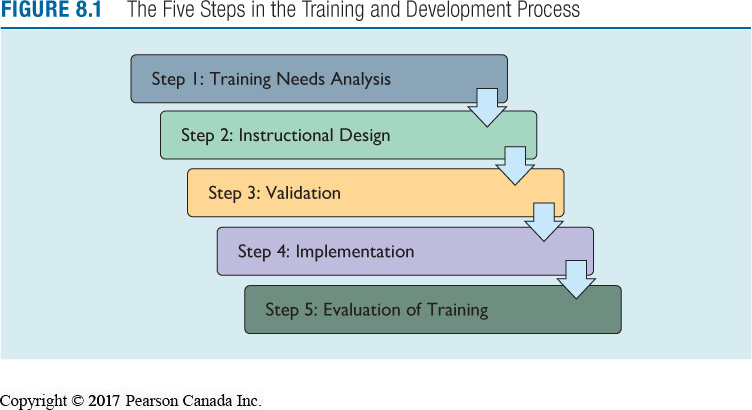
The five-step training process:
Step 1: Training Needs Analysis Ask: Is training actually needed? Is there a triggering event? Is training the right solution? What is the expected outcome after training?
Step 2: Instructional Design Once needs and objectives are established, design the training program by selecting among traditional and e-learning techniques. Adult learning principles ensure trainees understand the value and relevance of the training, feel involved and have some element of control, and experience a psychologically safe learning environment.
Step 3: Validation Does the training accomplish what you want? A pilot study with a small group assesses learning outcomes, identifies issues, and enables revisions before large-scale rollout.
Step 4: Implementation The 10-20-70 rule guides implementation: 10% of learning happens in the classroom; 20% happens in discussion with others after training; 70% happens through application and practice on the job. Implementation can be led by professional or in-house trainers.
Step 5: Evaluation Measure whether the training investment has achieved the desired outcomes, using Kirkpatrick’s four levels: reaction, learning, behaviour change, and results.
Module 6: Career Development and Performance Management
Part 1: Career Development
Career Choice
Career development begins with self-understanding. Two frameworks are commonly used:
The Holland Code (RIASEC), created by John Holland, identifies six personality-based career orientations: Realistic, Investigative, Artistic, Social, Enterprising, and Conventional. The theory holds that when a person’s career choice mismatches their personal orientation, it creates high levels of indecision and internal conflict.
*The Holland Codes (4:03)*Edgar Schein’s career anchors identify core values that keep people growing and motivated in their work — the elements a person won’t put aside when finding an appropriate career. Schein argues that in the 21st century, career development increasingly requires individuals to be proactive rather than relying on organizations to map their path.
*Ed Schein – Advice for Young Scholars: Find Your Career Anchors (3:29)*Roles in Career Development
The individual bears primary responsibility for their own career. Developing your career requires self-understanding, self-motivation, independent learning, self-promotion, and the ability to network effectively. Good managers support career aspirations by offering cross-training, stretch assignments, and committee work. A true learning organization creates opportunities through knowledge transfer, formal learning, and development opportunities — but ultimately, career development is the individual’s responsibility.

Management Development
Management development — any attempt to improve current or future management performance through knowledge, changed attitudes, or increased skills — helps organizations attract and retain top talent and achieve employer-of-choice status. The management development process involves: assessing the company’s strategic HR needs; creating a talent pool; and developing managers themselves, including training local managers to take over from expatriates.
Watch this illustrative video on the risk of ignoring succession:
*Why Succession Planning Is Essential: The Case of the Runaway Talent (4:55)*Leadership Development
Canada faces a significant shortage of leadership talent — “bench strength” — precisely as organizations shift away from command-and-control management toward leaders who can listen, tolerate learning-related mistakes, and compete globally. At the executive level, research shows that 70% of leadership learning comes from experience, 20% from mentors and coaches, and only 10% from formal training. Use of independent coaching and the development of coaching skills in managers is growing.
*The Impending Leadership Shortage (2:03)*
Part 2: Performance Management
The Performance Management Process
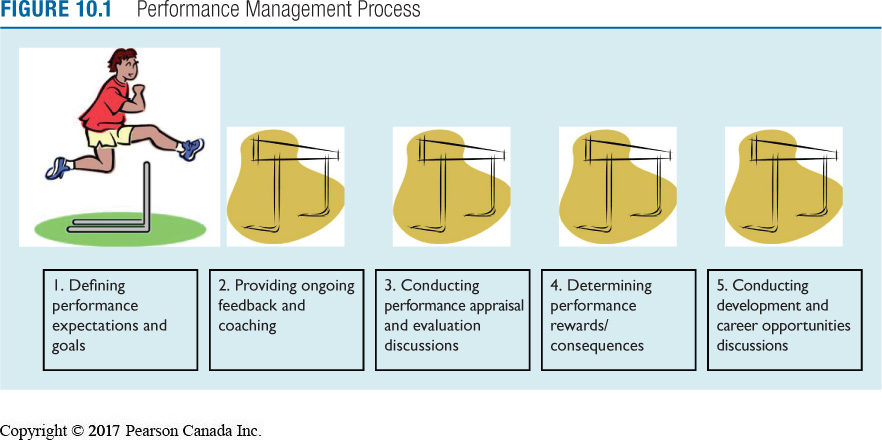
Performance management is not the same as performance appraisal. It is a continuous process of five steps:
Defining performance expectations — expectations must be clear, measurable, communicated to employees, supported by the organization, and legally defensible. They cannot discriminate directly or indirectly on protected grounds.
Providing ongoing feedback and coaching — performance management involves ongoing conversations between managers and staff about individual progress. The manager coaches in a two-way dialogue, and employees are responsible for monitoring their own performance and asking for help. For unsatisfactory employees, a performance improvement plan (PIP) makes expectations and deadlines crystal clear.
Conducting performance appraisal and evaluation discussions — generally conducted with the assistance of a predetermined, formal method to increase validity and reliability and reduce error and bias.
Determining performance rewards or consequences — connecting appraisal outcomes to recognition, compensation, promotion, or corrective action.
Conducting development and career opportunities discussions — using the appraisal conversation to look forward at professional growth and development.
Watch this example of what not to do in a performance review:
*Awkward Performance Review (2:38)*Legal and Ethical Issues in Performance Management
Ethics must be the bedrock of performance management: “tell people where they stand and be straight with them.” Factors that promote a legally defensible process include:
- Using job analysis to create job performance standards
- Developing behavioural rating instruments from those standards
- Providing definitive performance standards to all employees
- Using clearly defined individual dimensions of job performance
- Avoiding abstract trait names if using a graphic rating scale
- Treating supervisory ratings as only one component of a multi-source appraisal
- Training supervisors to use rating instruments and minimize bias
- Having more than one appraiser conduct independent appraisals
- Using formal appeal mechanisms and upper-level review of ratings
- Documenting all evaluations and termination decisions
- Providing corrective guidance to assist poor performers in improving

Module 7: Strategic Pay Plans and Pay-For-Performance and Financial Incentives
Part 1: Strategic Pay Plans
The Components of Total Rewards
Employee compensation is one part of a broader total rewards approach. The five components are:
- Compensation — direct pay
- Benefits — indirect pay
- Work-life programs — flexibility, wellness, balance
- Performance recognition — formal and informal acknowledgement
- Learning and career development — investment in the future
A total rewards approach recognizes that employees are motivated by more than salary alone, and that organizations competing for talent must offer a compelling overall value proposition.

Basic Considerations in Determining Pay Rates
Legal considerations: Organizations must comply with all applicable legislation including the Employment Standards Act, Workers’ Compensation, Employment Insurance, and minimum wage laws. In national organizations, HR professionals must know the legislation across all provinces.
Union influences: In most unionized environments, compensation is negotiated between management and union representatives through the collective bargaining process.
Compensation policies: Will the organization be a compensation leader or a follower? This strategic choice must align with the business strategy. Different roles (salaried, commission, hourly) may have different pay structures, each with its own administrative cost.
Equity: Two types of equity matter. Internal equity examines what others within the organization earn and whether employees perceive fairness. External equity compares pay rates to the market to ensure competitive wages — a critical tool for attraction and retention.
Establishing pay rates involves three steps: (1) job evaluation to determine the relative worth of jobs; (2) wage/salary surveys to determine what others are paying; (3) combining the evaluation and survey data to set the actual pay.

Pay for Knowledge
Competency-based pay (also called pay for knowledge or skill-based pay) compensates employees for the range, depth, and types of knowledge they are capable of using — not just the knowledge required for their current job.
Three types of competencies are commonly used:
- Core competencies — knowledge and behaviours all employees must exhibit (e.g., customer service orientation)
- Functional competencies — specific to a particular occupation or function (e.g., negotiation skills for salespeople)
- Behavioural competencies — expected behaviours regardless of role
For competency-based pay to work, competencies must be directly important, currently relevant, objectively measurable, and ideally developed through on-the-job training. Importantly, pay for competencies must not replace or overshadow pay for performance.

Pay Equity
Pay equity requires that equal wages be paid for jobs of equal value, as determined by gender-neutral job evaluation techniques. Organizations sometimes claim that female-dominated and male-dominated jobs are not easily comparable — but the Supreme Court of Canada does not support this position. Pay equity is not the same as equal pay: it requires comparing jobs of equal value (based on skill, effort, responsibility, and working conditions) rather than just equal type.
Part 2: Pay-For-Performance and Financial Incentives
Money and Motivation
Does money motivate? The question is more complex than it appears. Daniel Pink’s influential TED talk on motivation challenges conventional assumptions about the role of financial incentives:
*Dan Pink: The Puzzle of Motivation (18:36)*Several motivation theories have particular relevance to designing incentive plans:
- Herzberg’s Two-Factor Theory distinguishes between hygiene factors (whose absence causes dissatisfaction but whose presence doesn’t motivate) and motivators (whose presence genuinely motivates performance).
- Deci’s Self-Determination Theory examines how external rewards can sometimes undermine intrinsic motivation, a phenomenon known as the “crowding out” effect.
- Vroom’s Expectancy Theory posits that motivation depends on the expected outcome of effort — people are motivated when they believe effort will lead to performance, performance will lead to rewards, and the rewards are valued.
Organization-Wide Incentive Programs
Several organization-wide approaches align individual interests with collective success:
- Profit sharing: Most employees share a portion of the organization’s profits, creating a direct link between company performance and individual financial benefit.
- Employee Share Purchase/Stock Ownership Plans (ESOPs): A trust holds shares purchased for or issued to employees, distributed at key milestones or vesting dates.
- Gainsharing plans (including Rucker and Improshare plans): The philosophy is to eliminate the “us vs. them” mentality. Everyone must understand how the business runs — costs, sales, production — because everyone is expected to find improvements. Typically, groups split 75% of cost savings while the company retains 25%.
Employee Recognition Programs
Recognition is emerging as a critical — and cost-effective — component of the total rewards mix. The data is striking: lack of recognition and praise is the number-one reason employees quit; only 50% of managers give recognition for high performance; and up to 40% of workers feel they never receive recognition for outstanding contributions.
Effective recognition is specific, immediate, personal, and spontaneous. Public recognition and celebration are particularly valued — employees prefer recognition from their direct managers over any other source, by a 2:1 margin. Strategically aligned recognition reinforces organizational culture and facilitates strategic change.
*Roy Saunderson Talks Recognition (3:25)*Module 8: Employee Benefits and Services and Occupational Health and Safety
Part 1: Employee Benefits and Services
The Strategic Importance of Benefits
The strategic importance of benefits is increasing in the post-job security era. Strategically aligned benefits attract and retain the right people to help achieve business objectives.
*Employee Benefit Plans (4:49)*
Government-Mandated Benefits
Canada has one of the world’s finest collections of social programs to protect citizens when they cannot earn income. Mandated programs are funded through employer and employee contributions, along with general tax revenues. They include Employment Insurance (EI), the Canada/Quebec Pension Plan (C/QPP), Workers’ Compensation, and various job-protected leaves of absence.
Ontario, for example, introduced three new job-protected leaves: family caregiver leave, critically ill child-care leave, and crime-related child death and disappearance leave — recognizing that family responsibilities can take many unexpected forms.
Voluntary Employer-Sponsored Benefits
Although not required to do so, employers often provide many additional benefits, which can be purchased at group rates far lower than individuals could obtain on their own. These include:
- Life insurance
- Supplementary healthcare and medical insurance
- Short-term disability and sick leave
- Long-term disability
- Sabbaticals
- Retirement benefits

Mental Health in the Workplace
One of the biggest concerns regarding sick leave is mental health. Statistics show that mental health issues are now far more prevalent in today’s workplace than physical illness or injury. Mental Health Canada’s voluntary National Standard of Canada for Psychological Health and Safety in the Workplace (January 2013) guides organizations through a six-P framework: Policy, Planning, Promotion, Prevention, Process, and Persistence.

Sabbaticals and Retirement Benefits
While typically associated with academia, sabbaticals — unpaid leaves allowing employees to pursue personal goals or educational interests — are offered by some employers as a retention and renewal tool.
Pension plans come in two main forms:
- Defined benefit pension plans: benefits are predetermined by a formula, so retirees can calculate their pension in advance.
- Defined contribution plans: only the employer and employee contributions are defined; the actual benefit depends on the investment performance of those contributions.
Two key pension concepts are vesting — a provision that employer contributions to a pension fund cannot be forfeited for any reason after a certain period — and portability — the ability to transfer the value of earned pension benefits to a new employer’s plan or a locked-in RRSP when changing jobs.

Employee Services
Many employers provide services to help employees with personal and professional issues:
- Employee Assistance Programs (EAPs): Confidential counseling, work-life balance support, legal assistance, and other services, open to employees and often their families. EAPs help organizations manage the rising cost of absenteeism.
- Job-related services: Educational subsidies, professional development resources, and other tools to help employees perform their jobs more effectively.
- Executive perquisites (“perks”): Benefits typically reserved for senior executives, including company vehicles, use of corporate properties, management loans, financial counselling, and “golden parachutes.”
Flexible Benefits Programs
Research confirms that an employee’s choice of benefits is influenced by age, marital status, and other demographic factors. Flexible (or “cafeteria-style”) benefits programs recognize that what one employee values highly may be of little interest to another. Many employers have shifted from fixed to flexible benefits both to meet employee preferences and as a cost-containment strategy.
Part 2: Occupational Health and Safety
Occupational Health and Safety Legislation
Every workplace has the potential for health and safety issues that can affect employees and employers for life. OHS laws across Canada fall into three categories: general rules, rules for specific industries, and rules related to specific hazards. Across jurisdictions, the basic features include: rights of both employers and employees, and enforcement mechanisms.
*Small Business Talking Safety (6:42)*Responsibilities and Rights of Employers and Employees
Employers are responsible for exercising due diligence — taking every reasonable precaution to ensure the health and safety of workers.
Employees have three basic rights:
- The right to know about workplace safety hazards
- The right to participate in OH&S processes
- The right to refuse unsafe work, if there is “reasonable cause”
The law also calls on employees to report co-workers who are not following proper safety procedures — a difficult but important responsibility.
*Safety Is Personal: An Employer's Story (7:11)*Safety and the Law: The Westray Act
In 1992, the Westray Mine disaster became the worst mining accident on record in Canada. As a result of the accident, the Criminal Code was amended under Bill C-45, now known as the “Westray Act” or Corporate Killing provision:
“Every one who undertakes, or has the authority, to direct how another person does work or performs a task is under legal duty to take reasonable steps to prevent bodily harm to that person, or other person, arising from that work or task.”
Supervisors can be held personally responsible for accidents and injuries. Effective July 1, 2014, Ontario introduced mandatory OHSA awareness training requirements for all workers and supervisors.
OHS Challenges: Workplace Harassment and Violence
The Occupational Health and Safety Act includes provisions addressing workplace violence and workplace harassment:
Workplace harassment is defined as “engaging in a course of vexatious comment or conduct against a worker in a workplace that is known or ought reasonably to be known to be unwelcome.” It includes bullying, teasing, intimidating jokes, offensive materials, and offensive phone calls.
*Workplace Bullying: The Silent Epidemic (10:30)*Post-Traumatic Stress Disorder (PTSD) — a series of symptoms that can develop after exposure to actual or perceived threats of death, serious injury, or harm to oneself or others — is increasingly recognized as a workplace-related illness, particularly for first responders.
Employee Wellness
A healthy workplace encompasses three elements: the physical environment, the social environment, and healthy practices. A fourth element — psychological health and safety — is now recognized as equally important. Bell Canada’s “Let’s Talk” initiative has been a leading example of employer commitment to reducing mental health stigma and supporting employees.
Module 9: Managing Employee Separations
The Cost of Turnover
Whether a turnover is voluntary or involuntary, significant costs are associated with every departure. These costs include:
- Separation: Interview time, administration, and severance or separation pay
- Vacancy: Costs of temporary workers, overtime, or lost productivity while the position is unfilled
- Replacement: Recruitment and hiring costs for the new employee
- Training: Onboarding, orientation, and development costs for the replacement

Voluntary Turnover
Voluntary turnover — quitting, resignation, retirement — can often be anticipated through exit interviews, staff surveys, and annual HR reviews. There is frequently a “final straw,” but the seeds of departure are sown much earlier. The term “hobo phenomena” groups together unexplained or ambiguous departure reasons.
Table 15.1 in the textbook identifies voluntary reasons for turnover in order of frequency: employees sought new challenges (30%), ineffective leadership (25%), poor relationship with managers (22%), desire for work-life balance (21%), feeling contributions were not valued (21%), seeking better compensation (18%), personal values mismatch (17%), and better fit for skills (16%).
It is important to note that the concept of “cradle to grave” employment with one organization is effectively gone. There is currently no legislative requirement for notice periods for voluntary resignations in most provinces.

Involuntary Turnover
Involuntary turnover is employer-initiated termination of an employee, usually for performance reasons or as a result of organizational downsizing. Dismissal for performance must not occur until all reasonable steps have been taken to rehabilitate or salvage the employment relationship through progressive discipline.
A fair and just progressive discipline process has three foundations:
- Rules and regulations — written descriptions of unacceptable behaviours, usually in an employee handbook or code of conduct
- Progressive discipline policy — a step-by-step process normally including a verbal warning, written warning(s), suspension (paid or unpaid), and dismissal, with a required appeals mechanism at each stage
- Due process — ensuring a fair, objective investigation before any disciplinary action
Dismissal for just cause means that when genuine just cause exists, there is no severance, no notice period, and no additional payments beyond earned wages and vacation. The burden of proof for just cause rests on management. Examples include disobedience, incompetence, dishonesty, fighting, persistent absence or lateness, theft, and insubordination.
Questions that must be answered to establish just cause include: Was the employee forewarned of consequences? Were management’s requirements reasonable? Was reasonable effort made to address unsatisfactory performance? Was the investigation fair and objective? Was the discipline proportional to the offence?
Fair Treatment in Employee Separations
Organizational justice has three components:
- Distributive justice — fairness of the decision’s outcome
- Procedural justice — fairness of the process used to make the decision
- Interactional justice — fairness in interpersonal treatment: treating others with dignity and respect
These three components are all important in the context of termination. How the separation is handled will be remembered long after the employee has left, and affects the morale and trust of remaining employees.
Types of Dismissals
Wrongful dismissal occurs when an employee believes termination violated a relevant law, the employment contract, or the employer’s own dismissal procedures. This does not apply in cases of just cause. Penalties to the employer can include:
- Bad-Faith Damages — for failing to be candid, reasonable, honest, and forthright during the termination process (applies only to extreme conduct; Wallace v. United Grain Growers Ltd. established this principle)
- Punitive damages — for harsh and vindictive treatment during termination; applies only in exceptional cases involving malicious or outrageous conduct
Constructive dismissal occurs when the employer makes substantial, unilateral, unacceptable changes to the employment contract, even though the employee has not been formally terminated. Examples include demotion, pay reduction, benefits reduction, forced resignation, forced early retirement, forced transfer, and significant changes to job duties.
Termination Interviews
When conducting a termination interview, follow the Golden Rule: “Do unto others as you would have them do unto you.” Be kind, respectful, and compassionate — while avoiding saying or doing anything that could provide the employee with ammunition in future legal proceedings. The text outlines six appropriate steps; inappropriate conduct during terminations can significantly increase legal liability and damage organizational reputation.
Module 10: Labour Relations
Early Unionization
The labour movement in Canada has deep historical roots. Understanding the origins of unions — including early organizing efforts in industries like auto manufacturing — provides context for understanding contemporary labour relations.
*Unionization at Ford in 1930s and Early 1940s (7:11)*The Labour Movement in Canada Today
The primary goal of labour unions in Canada is to obtain economic benefits and improved treatment for their members through job security, pay and benefits, as well as through influencing government policy.
- Business unionism focuses on economics and the welfare of union members
- Social unionism focuses on influencing the broader social and economic policies of governments
The CBC’s interactive tool tracking changes in union membership up to 2011 reveals that while union density varies significantly by sector and province, the overall trend reflects a gradual decline in private-sector unionization alongside relative stability in public-sector membership.
Three Reasons to Join a Union
- Dissonance-based reason: A mismatch between an individual’s expectations of work and the actual experience of work
- Utility-based reason: An individual believes there is a cost-benefit advantage to unionization
- Political/ideological reason: An individual believes collective negotiation will produce better employment terms than individual bargaining
Union Organizing Campaigns
Clear rules govern union organizing campaigns and apply equally to both sides.
Unions cannot: coerce or threaten members to join; engage in bad-faith bargaining; or use company time to persuade employees to join.
Employers cannot: offer wage increases outside the normal process to discourage organizing (e.g., offering an unscheduled raise in March when increases normally occur in January); engage in bad-faith bargaining; or threaten or make promises to employees who may join the union.
Violations by employers can result in proceedings before the Labour Relations Board, up to and including automatic union certification without a vote. Front-line supervisors and managers must be trained to understand these restrictions.
*Court Rules Wal-Mart Must Compensate Workers (0:50)*Collective Bargaining
Collective bargaining is the process by which a formal collective agreement is established between management and labour. The three steps are:
- Preparation for bargaining — gathering facts, data, and analysis to support the union’s or management’s position
- Face-to-face negotiations — union and management representatives meet directly
- Ratification — unit members vote through secret ballot to approve or reject the proposed collective agreement
Bargaining approaches:
- Distributive bargaining: One party wins at the expense of the other (zero-sum)
- Integrative bargaining: Parties emphasize mutual trust and find creative solutions to meet both sides’ interests
- Mutual gains bargaining: Effective problem-solving and conflict resolution address the interests of both members and the organization
When a bargaining impasse occurs, the parties may turn to third-party mechanisms:
- Conciliation: A third party who cannot make direct input, only attempting to facilitate communication
- Mediation: A neutral third party with input into the process; both sides voluntarily agree
- Arbitration: An arbitrator investigates through interest arbitration and imposes a final, binding settlement — used in back-to-work orders and for essential workers who cannot legally strike

Module 11: Managing Human Resources in a Global Business
Multinational Companies — An Employee’s View
Working for a multinational company involves a unique set of challenges, from navigating different cultural expectations to managing career continuity across borders. The “survival guide” perspective (“Toto, We’re Not In Kansas Anymore”) captures the reality that employees taking on international assignments face an experience fundamentally different from domestic employment.
How Intercountry Differences Affect HRM
Organizations operating only within Canada face a relatively limited set of variables influencing HR practice. When operating across countries, HR must consider:
- Cultural differences — communication styles, authority structures, individualism vs. collectivism, attitudes toward time
- Economic systems — market-driven vs. state-directed economies, wage levels, cost of living
- Legal systems — different employment legislation, human rights frameworks, mandatory benefits, and dispute resolution
- Labour costs — dramatic variation in wage rates and employment cost burdens
- Industrial relations — the role and power of unions varies enormously by country

Global Relocation
Global relocation assignments are increasing, and relocation policies are becoming more flexible to meet the needs of potential expatriates. However, family issues remain the dominant concern in the reluctance to accept international assignments, alongside financial considerations.
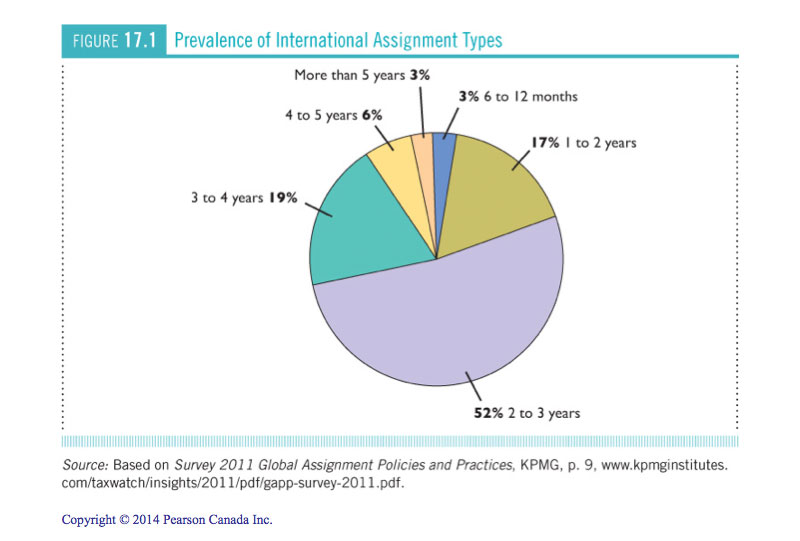
- Short-term assignments (under 2 years): Can often be handled without full family relocation; frequent return visits are built into the assignment
- Mid-length assignments (2–3 years, now the most common category): Whole families are typically relocated, requiring careful attention to schooling, spousal employment, and cultural adaptation
Pressing Challenges for Organizations in Global Staffing
Successful global assignments require attention to several interconnected factors — failure to address any one of them contributes to assignment failure:
- Candidate identification, assessment, and selection — criteria must include both technical skills (KSAs) and cross-cultural sensitivity, flexibility, and adaptability
- Cost projections — organizations must accurately predict all assignment-related costs (housing, transportation, tax equalization, schooling, etc.)
- Assignment letters — clear documentation of all terms and conditions of the assignment
- Compensation, benefits, and tax programs — how pay is determined, how increases are calculated, what benefits apply, and how taxation in both home and host countries is managed
- Relocation assistance — housing, transportation, and a “buddy” system to help expatriates settle in
- Family support — spousal work programs, schooling arrangements, language classes, and volunteer opportunities
One strategic insight: organizations tend to screen candidates for the current job rather than for future cross-cultural adaptability. Assignment failure rates might be significantly reduced by assessing cross-cultural personality and aptitude at the point of initial hiring, before international needs arise.
Why Expatriate Assignments Fail
The number-one reason global assignments fail is family issues. When an employee is sent abroad, the whole family must adjust — and without adequate support, family distress translates directly into employee distress, poor performance, and early return.
Organizations should, wherever possible, include the whole family in adaptability training covering customs, language, work expectations, and schooling. The better prepared the family is, the less distracted and more productive the employee will be.
*Living in Prague: What You Wish You Knew Before Moving (2:23)*Key strategic HR questions for global operations:
| Question | Key Considerations |
|---|---|
| Global staffing policy | Ethnocentric (home-country staff), polycentric (local staff), or geocentric (best person regardless of nationality)? |
| Selection for global assignments | Technically skilled and culturally adaptable? |
| Orientation and training | Culture, language, social customs, host-country business practices |
| International compensation | Home-country vs. host-country pay structure; balance sheet approach |
| Performance appraisals | Who conducts them? How are cultural performance norms factored in? |
| International labour relations | State of unions and collective bargaining in the host country |
Repatriation
Moving the expatriate and their family back home can be surprisingly difficult — sometimes more challenging than going abroad. Up to half of expatriates leave their organization following repatriation, often taking their new international knowledge and skills to a competitor.
Strategies to improve repatriation success include:
- Writing repatriation agreements before departure
- Assigning a sponsor to maintain the employee’s organizational connection during the assignment
- Providing career counseling on return
- Keeping communication open throughout the assignment
- Offering financial support during the reintegration period
- Developing a formal reorientation program
- Building in regular return trips during the assignment

Managing Global Workers Within Canada
Many foreign workers face barriers to employment in Canada including: lack of Canadian work experience, poor transferability of foreign credentials, and language or literacy challenges. The Ontario Human Rights Commission’s Policy on Removing the “Canadian Experience” Barrier addresses the discriminatory nature of requiring prior Canadian experience for employment, which disproportionately affects new immigrants who are otherwise fully qualified.
*Challenges of Managing a Global Workforce: Peter Goerke, Zurich Insurance (4:09)*